U.
HomeRegionsLanguagesEmotionsCollections
Find Your Word

“The limits of my language mean the limits of my world.”

— Ludwig Wittgenstein, Philosopher

Untranslatable

A curated collection of the world's most beautiful expressions—words that remind us language is humanity's greatest invention.

  • Home
  • Collections
  • Regions
  • Countries
  • Emotions
  • Tags
  • Contexts
  • Finder
  • Europe
  • Asia
  • Americas
  • Africa
  • Middle East
  • About
  • Contact
  • Privacy Policy
  • Terms of Service

2026 © Untranslatable. All rights reserved.

    /
    /
    1. Home
    2. /
    3. Asia
    4. /
    5. Koan
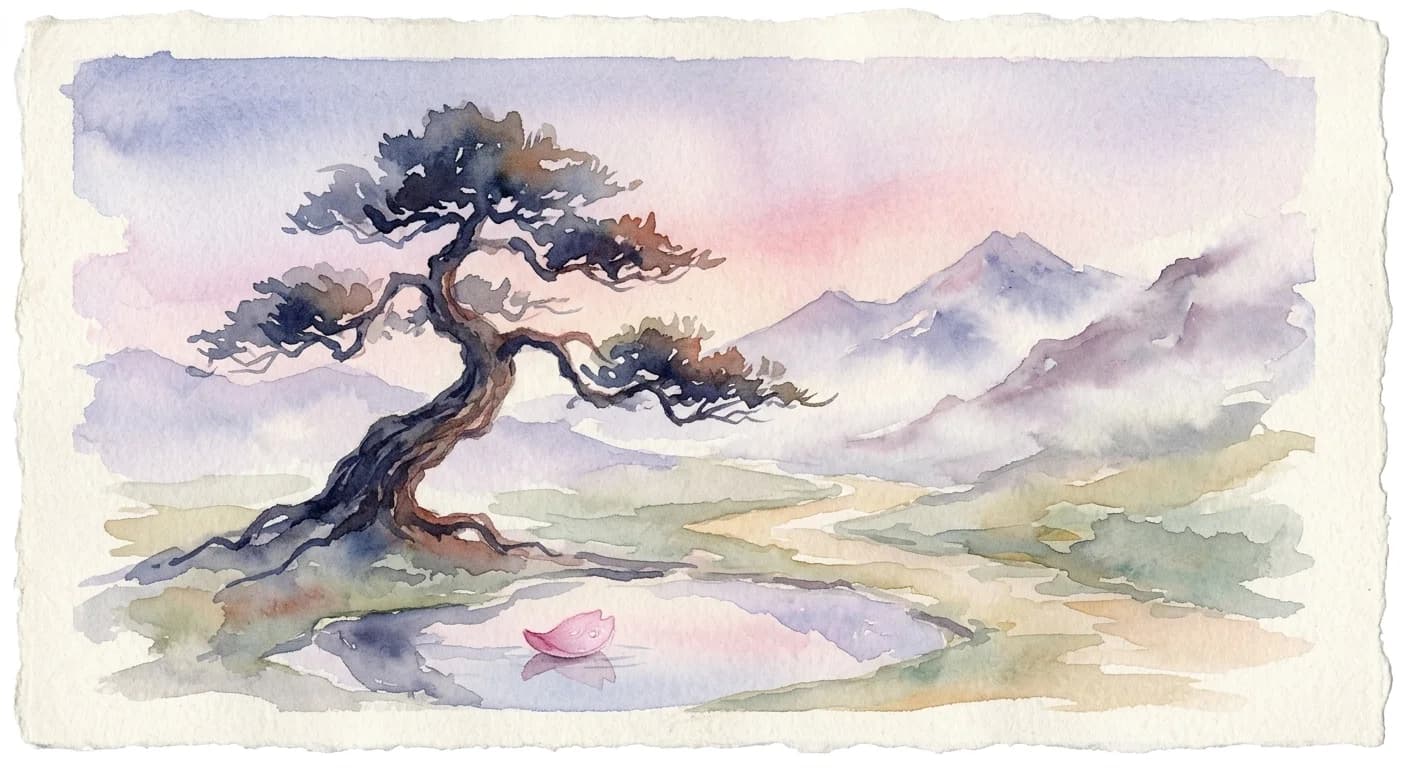
    Artistic representation of Koan
    Japanese•
    🇯🇵Japan

    Koan

    /KOH-ahn/

    Meaning

    A koan is far more than a mere riddle; it's a potent spiritual device in Zen Buddhism, a paradoxical anecdote or question designed to utterly derail intellectual thought. Presented by a master, it challenges the student to transcend conventional logic, pushing them past dualistic thinking into a direct, intuitive grasp of reality. The goal is to shatter preconceived notions, leading to a profound, often sudden, moment of satori or enlightenment, revealing truth beyond words.

    Literal Translation

    Public case / law case

    The Story Behind the Word

    The concept of the koan emerged in China during the Tang and Song dynasties, evolving from records of dialogues between Chan (Zen) masters and their students, particularly those deemed exemplary or 'public cases' (gong'an in Chinese, kōan in Japanese). These exchanges often contained non-sequiturs, absurdities, or profound insights that defied rational interpretation. In Japan, during the Kamakura period, Zen monks systematized koan study as a central method for spiritual training, particularly within the Rinzai school. The existence of koans reveals a cultural emphasis on direct experience and intuition over scholasticism, reflecting a worldview where ultimate truth cannot be apprehended through intellectual analysis alone but requires a radical shift in perception. It underscores the Japanese aesthetic and philosophical appreciation for the unsaid, the implied, and the sudden flash of insight.

    Experience It

    The First Koan

    A young Zen student bowed before his master, eager to begin his training. The master, without a word, held up a single finger and asked, 'What is the sound of one hand clapping?' The student sat in stunned silence, his mind racing to comprehend the impossible.

    Master's Sudden Strike

    During a private interview, a monk recited a profound sutra verse, expecting praise. The master suddenly struck him with his staff, shouting, 'That's not it!' The monk, initially startled, later realized the master's action was a koan itself, forcing him beyond mere recitation to direct experience.

    The Deeper Meaning

    Koans embody a profound philosophical stance that critiques the limitations of language and conceptual thought in grasping ultimate reality. They stem from the Mahayana Buddhist understanding of emptiness (sunyata), suggesting that all phenomena are devoid of inherent existence and that our dualistic categories are ultimately illusory. By breaking the mind's habitual patterns, koans aim to reveal a non-dualistic, interconnected, and directly experienced truth that lies beyond the grasp of the rational intellect, pointing towards a liberation from suffering rooted in conceptual attachment.

    Did You Know?

    The most famous koan, 'What is the sound of one hand clapping?' (Sekishu no Onjo), was popularized by Hakuin Ekaku, a pivotal figure in Japanese Rinzai Zen, who used it as a foundational practice.

    How It's Used

    Used within Zen Buddhist traditions to guide meditation and spiritual practice, often presented by a master to a student.

    Emotions
    peace,serenity,wonder
    Contexts
    relaxation,solitude,work
    🇯🇵Japan

    by Dr. Kenji Tanaka·Written Mar 14, 2026·Updated Apr 3, 2026

    Related Words

    Explore more
    Dolce far nienteItalian

    Dolce far niente captures the profound joy and effortless pleasure derived from simply existing without obligation or purpose. It's the art of savoring moments of pure, unadulterated idleness – lying in the sun, watching the clouds drift, or enjoying a leisurely coffee – not as a break from work, but as a valuable state in itself. This 'sweetness of doing nothing' is a conscious embrace of stillness and contentment, allowing the soul to breathe and the senses to fully engage with the present.

    Wabi-sabiJapanese

    Wabi-sabi is the profound appreciation for the ephemeral, the imperfect, and the incomplete aspects of existence. It is about discovering beauty in the subtle textures of age, the unique character of flaws, and the gentle decay that marks the passage of time. This philosophy encourages a quiet acceptance of impermanence and a mindful connection to the natural world, finding elegance in simplicity and authenticity.

    IkigaiJapanese

    Ikigai is more than just a reason to get out of bed; it's a deeply personal and evolving sense of purpose that brings genuine fulfillment and joy to one's life. It represents the sweet spot where your passions, talents, needs of the world, and what you can be paid for beautifully converge. Discovering your ikigai often leads to a life lived with intentionality, resilience, and a profound connection to one's contributions. It's the intrinsic motivation that fuels a meaningful existence, regardless of external circumstances.

    NunchiKorean

    Nunchi is the sophisticated, almost telepathic, ability to instantly grasp the unspoken dynamics of any social situation, anticipating others' thoughts and feelings, and then responding with impeccable grace and timing. It's an acute form of social intuition, allowing one to navigate complex interpersonal landscapes by reading subtle cues like body language, tone, and context. Possessing good nunchi means effortlessly understanding the underlying emotional currents and adjusting one's behavior to maintain harmony and effectiveness, often without a single word exchanged.