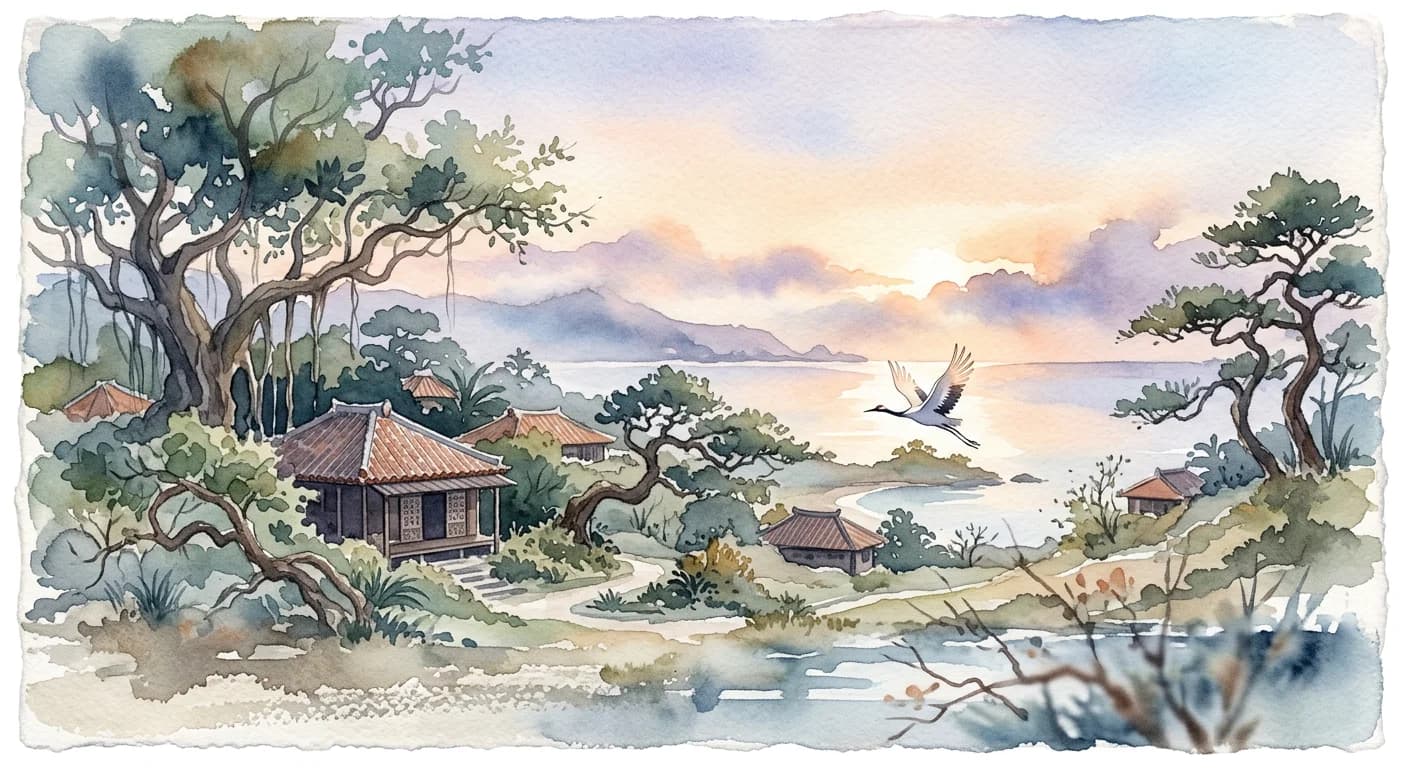
Nankurunaisa
/NAHN-koo-roo-NAI-sah/
Meaning
Nankurunaisa embodies a profound Okinawan philosophy of hopeful resilience, suggesting that with time and persistent effort, all challenges will ultimately resolve themselves for the better. It's an active acceptance of life's inherent uncertainties, encouraging individuals to navigate hardship with steadfastness and an unwavering belief in a positive future. This phrase serves as a comforting mantra, born from a deep cultural history of overcoming adversity, gently reminding one that patience and enduring spirit pave the way to eventual serenity and well-being.
Literal Translation
Eventually, everything will be alright.
The Story Behind the Word
The phrase "Nankurunaisa" is deeply rooted in Okinawa's unique history, particularly its numerous periods of hardship, including devastating typhoons, foreign occupations, and the brutal Battle of Okinawa during WWII. This challenging past fostered a profound sense of resilience, community solidarity (yuimaru), and a pragmatic, yet optimistic, outlook on life. It reflects a cultural emphasis on enduring adversity with grace and a belief in the cyclical nature of time, where difficulties eventually give way to peace. The Okinawan worldview, influenced by Ryukyuan animism and Buddhism, often emphasizes harmony with nature and an acceptance of the flow of life, rather than striving for absolute control. "Nankurunaisa" thus encapsulates this spirit of hopeful perseverance, a quiet strength that has allowed Okinawans to rebuild and thrive despite immense suffering.
Experience It
Facing Business Setback
After investing heavily, Kenji's new restaurant faced an unexpected decline in customers. He felt discouraged, but his grandmother, seeing his worry, gently placed a hand on his shoulder and said, "Nankurunaisa." Kenji understood it wasn't a call to inaction, but a reminder to keep working hard, be patient, and trust that things would eventually improve.
Comforting a Friend
Yumi was heartbroken after a significant personal loss, feeling overwhelmed and hopeless. Her friend, listening patiently, offered warm tea and soft words. "It’s incredibly tough now, I know," she said, "but remember, Nankurunaisa." The phrase provided a quiet comfort, a gentle assurance that while pain was present, healing and peace would eventually follow.
What Gets Lost in Translation
English speakers might mistakenly interpret "Nankurunaisa" as a passive 'don't worry, be happy' or a fatalistic 'whatever happens, happens.' However, it's far from passive; it implicitly encourages perseverance and effort in the face of adversity, with the *belief* that such actions will eventually lead to a positive outcome. It's not about ignoring problems, but about confronting them with resilient optimism.
Across Cultures
Similar sentiments of patient optimism exist across cultures. The Filipino concept of 'Bahala Na' often implies a trusting surrender to fate after one has done their best. The Spanish 'Mañana' can sometimes carry a similar connotation of deferring worry, though it often lacks the active effort implied by 'Nankurunaisa.' In some Western contexts, phrases like 'this too shall pass' or 'time heals all wounds' convey a similar belief in eventual resolution, but perhaps without the same emphasis on active, hopeful endurance.
The Deeper Meaning
This word reveals a profound Okinawan philosophy centered on resilience, patience, and a deep-seated trust in the natural unfolding of life. It reflects a worldview that acknowledges suffering and uncertainty as inherent parts of existence, yet maintains an unshakeable belief in the eventual triumph of good and the restoration of balance. It encourages living with an active, hopeful acceptance, understanding that while one cannot control every outcome, consistent effort and a positive spirit pave the way for a brighter future.
Did You Know?
While often translated simply as 'eventually, everything will be alright,' the original Ryukyuan dialect breakdown of 'Nankurunaisa' is more nuanced, implying 'do your best, and in the end, it will work out.'
How It's Used
Typically used as an encouraging mantra or a comforting phrase when facing difficulties or uncertainty. It can be spoken to oneself or to others to offer solace and promote a positive outlook.