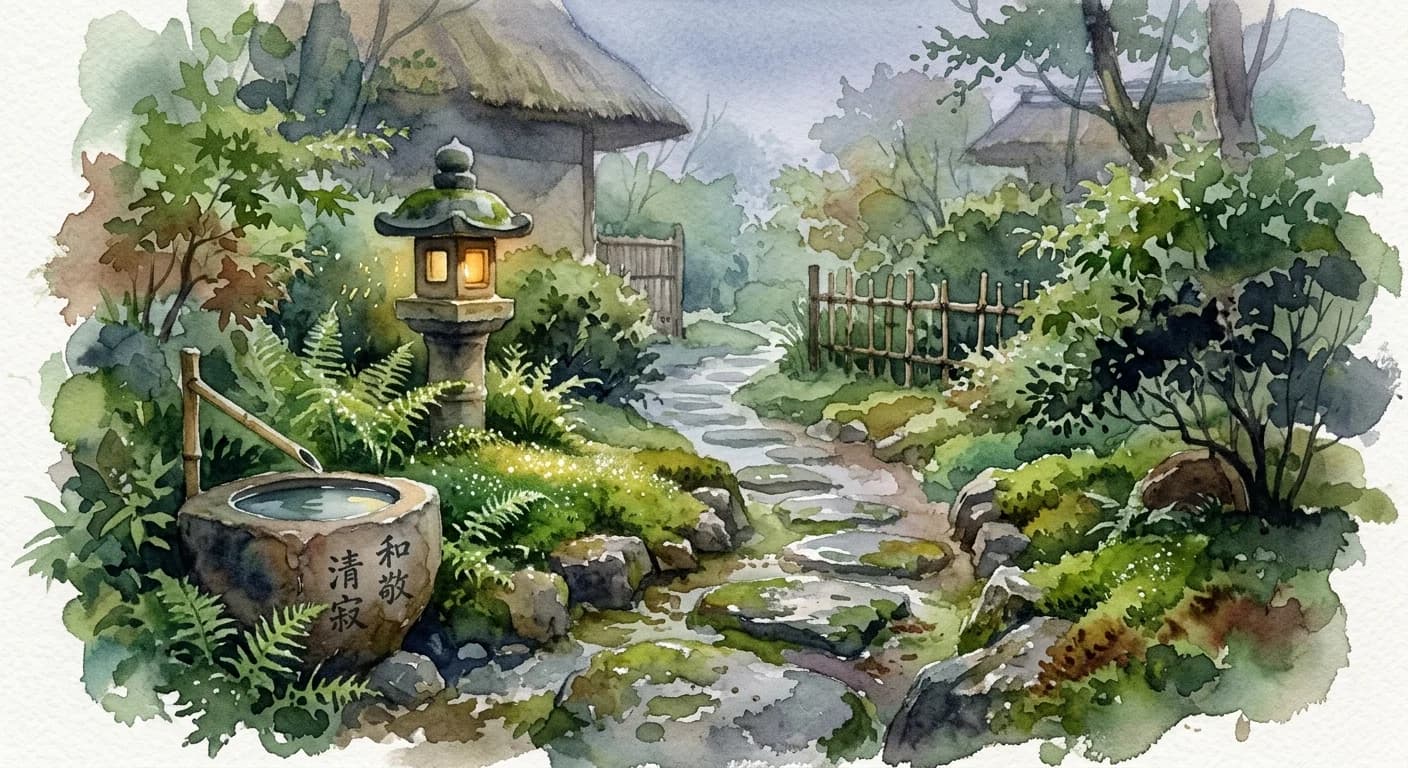
Roji
/ROH-jee/
Meaning
Roji is more than just a garden path; it is a meticulously crafted transitional landscape, a "dewy path" designed to cleanse the mind and spirit before entering the sacred space of a tea house. This tranquil, often narrow passage, adorned with moss-covered stones, carefully placed lanterns, and a water basin for ritual purification, compels a deliberate slowing of pace. It serves as a psychological threshold, shedding the dust of the mundane world and preparing the visitor for a moment of profound contemplation and refined hospitality, fostering a deep connection with nature's subtle beauty.
Literal Translation
dewy path
The Story Behind the Word
The concept of Roji emerged with the development of the Japanese tea ceremony (chanoyu) in the 16th century, particularly under the influence of tea masters like Sen no Rikyū. It embodies the core aesthetic principles of wabi-sabi – appreciating beauty in imperfection, transience, and simplicity – and ichigo ichie, the philosophy of treasuring each moment as unique and unrepeatable. The Roji's deliberate design reflects a profound respect for nature and a desire to cultivate mindfulness and humility. It exists because Japanese culture places immense value on ritual, preparation, and the creation of specific atmospheres that elevate everyday experiences into spiritual encounters. It reveals a worldview where even the approach to an event is considered an integral part of the experience, fostering a sense of reverence and presence.
Experience It
Evening Tea Ceremony
The guest stepped onto the Roji, the faint glow of a stone lantern guiding their way. Each gravel crunch underfoot, each dewdrop glistening on the moss, felt like a deliberate step away from the city's hum, their mind settling into a quiet anticipation of the tea master's hospitality.
Morning Meditation Retreat
Before dawn, the zen monk walked the Roji towards the meditation hall, the cool morning air and the scent of damp earth grounding him. The simplicity of the path, devoid of distraction, allowed his thoughts to quiet, preparing his spirit for silent contemplation.
The Deeper Meaning
Roji encapsulates the Japanese aesthetic of 'ma' – the conscious appreciation of empty space and the intervals between things – and 'oku,' the sense of inner spatial depth and hidden beauty. It teaches that true experience is not just about the destination but the journey, emphasizing the importance of preparation, mindfulness, and the subtle interplay between human design and natural elements in fostering a profound sense of peace and presence.
Did You Know?
The term 'roji' literally means 'dewy path,' and traditionally, tea masters would often sprinkle water on the path before guests arrived, enhancing its fresh, natural appearance and symbolism of purification.
How It's Used
Used to describe the garden path leading to a tea house in Japanese architecture and garden design.