U.
HomeRegionsLanguagesEmotionsCollections
Find Your Word

“The limits of my language mean the limits of my world.”

— Ludwig Wittgenstein, Philosopher

Untranslatable

A curated collection of the world's most beautiful expressions—words that remind us language is humanity's greatest invention.

  • Home
  • Collections
  • Regions
  • Countries
  • Emotions
  • Tags
  • Contexts
  • Finder
  • Europe
  • Asia
  • Americas
  • Africa
  • Middle East
  • About
  • Contact
  • Privacy Policy
  • Terms of Service

2026 © Untranslatable. All rights reserved.

    /
    /
    1. Home
    2. /
    3. Asia
    4. /
    5. Ryokan
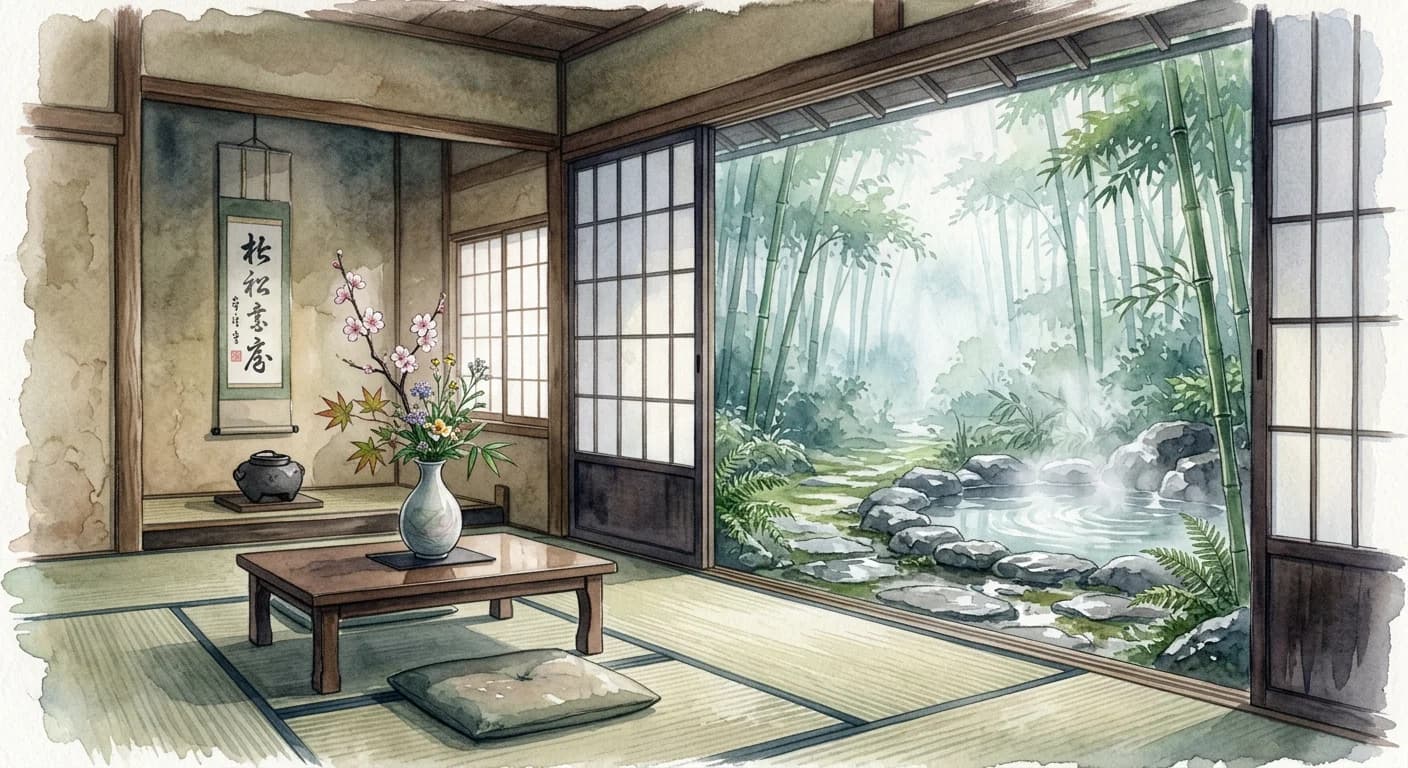
    Artistic representation of Ryokan
    Japanese•
    🇯🇵Japan

    Ryokan

    /ree-OH-kahn/

    Meaning

    A ryokan is more than just a place to stay; it's a meticulously crafted immersion into traditional Japanese hospitality, 'omotenashi.' Guests are welcomed into serene spaces where every detail, from the minimalist tatami room to the multi-course 'kaiseki' dining, is designed for profound comfort and aesthetic pleasure. It offers a tranquil escape, inviting visitors to shed the modern world and embrace a slower, more contemplative pace of life, often complemented by the restorative powers of natural hot springs ('onsen').

    Literal Translation

    lodging house

    The Story Behind the Word

    The concept of the ryokan evolved from post stations and inns along ancient travel routes, particularly during the Edo period (1603-1868) when travel became more common. Its enduring significance lies in 'omotenashi,' the quintessentially Japanese approach to hospitality that anticipates a guest's needs without explicit requests, a philosophy deeply rooted in tea ceremony aesthetics and Zen principles of mindfulness and respect. A ryokan reveals a culture that values harmony with nature, meticulous attention to detail, and a deep appreciation for transient beauty. It's a space where the ephemeral art of service is elevated, and the guest's well-being is paramount, reflecting a societal emphasis on group harmony and respect for others.

    Experience It

    Evening Kaiseki Delight

    After a day of exploring, a couple returns to their ryokan. A kimono-clad attendant quietly arranges an elaborate 'kaiseki' dinner on a low table in their room, each dish a miniature work of art, explaining the seasonal ingredients with a gentle smile. They savor the meal, gazing out at the moonlit garden.

    Morning Onsen Serenity

    Before breakfast, a solo traveler slips into the ryokan's outdoor 'onsen.' Steam rises gently from the mineral-rich water as they soak, surrounded by moss-covered rocks and the sound of rustling bamboo. The experience washes away all tension, preparing them for the day ahead.

    The Deeper Meaning

    The ryokan embodies the Japanese aesthetic of 'wabi-sabi' – finding beauty in imperfection and transience – and 'ichigo ichie,' the idea that each moment is a unique, unrepeatable encounter. It encourages guests to slow down, appreciate the present, and find peace in simple, refined elegance, reflecting a deep spiritual connection to nature and mindful living.

    Did You Know?

    The oldest operating hotel in the world, Nishiyama Onsen Keiunkan, is a ryokan in Japan, founded in 705 AD and run by the same family for 52 generations!

    How It's Used

    Used to refer to traditional Japanese inns offering lodging and hospitality, often including meals and hot spring baths.

    Emotions
    belonging,comfort,peace,serenity
    Contexts
    dining,hospitality,relaxation,travel
    🇯🇵Japan

    by Dr. Kenji Tanaka·Written Mar 14, 2026·Updated Apr 3, 2026

    Related Words

    Explore more
    Dolce far nienteItalian

    Dolce far niente captures the profound joy and effortless pleasure derived from simply existing without obligation or purpose. It's the art of savoring moments of pure, unadulterated idleness – lying in the sun, watching the clouds drift, or enjoying a leisurely coffee – not as a break from work, but as a valuable state in itself. This 'sweetness of doing nothing' is a conscious embrace of stillness and contentment, allowing the soul to breathe and the senses to fully engage with the present.

    SobremesaSpanish

    Sobremesa is the cherished, often extended period immediately following a meal, particularly lunch or dinner, where diners remain seated at the table to enjoy conversation, coffee, and digest not just the food, but the company itself. It’s a dedicated time for unhurried social bonding, storytelling, and shared laughter, transforming a simple meal into a profound communal experience. Far from just clearing the dishes, sobremesa is an integral part of Spanish social life, often lasting for hours.

    Wabi-sabiJapanese

    Wabi-sabi is the profound appreciation for the ephemeral, the imperfect, and the incomplete aspects of existence. It is about discovering beauty in the subtle textures of age, the unique character of flaws, and the gentle decay that marks the passage of time. This philosophy encourages a quiet acceptance of impermanence and a mindful connection to the natural world, finding elegance in simplicity and authenticity.

    IkigaiJapanese

    Ikigai is more than just a reason to get out of bed; it's a deeply personal and evolving sense of purpose that brings genuine fulfillment and joy to one's life. It represents the sweet spot where your passions, talents, needs of the world, and what you can be paid for beautifully converge. Discovering your ikigai often leads to a life lived with intentionality, resilience, and a profound connection to one's contributions. It's the intrinsic motivation that fuels a meaningful existence, regardless of external circumstances.