U.
HomeRegionsLanguagesEmotionsCollections
Find Your Word

“The limits of my language mean the limits of my world.”

— Ludwig Wittgenstein, Philosopher

Untranslatable

A curated collection of the world's most beautiful expressions—words that remind us language is humanity's greatest invention.

  • Home
  • Collections
  • Regions
  • Countries
  • Emotions
  • Tags
  • Contexts
  • Finder
  • Europe
  • Asia
  • Americas
  • Africa
  • Middle East
  • About
  • Contact
  • Privacy Policy
  • Terms of Service

2026 © Untranslatable. All rights reserved.

    /
    /
    1. Home
    2. /
    3. Asia
    4. /
    5. Savasana
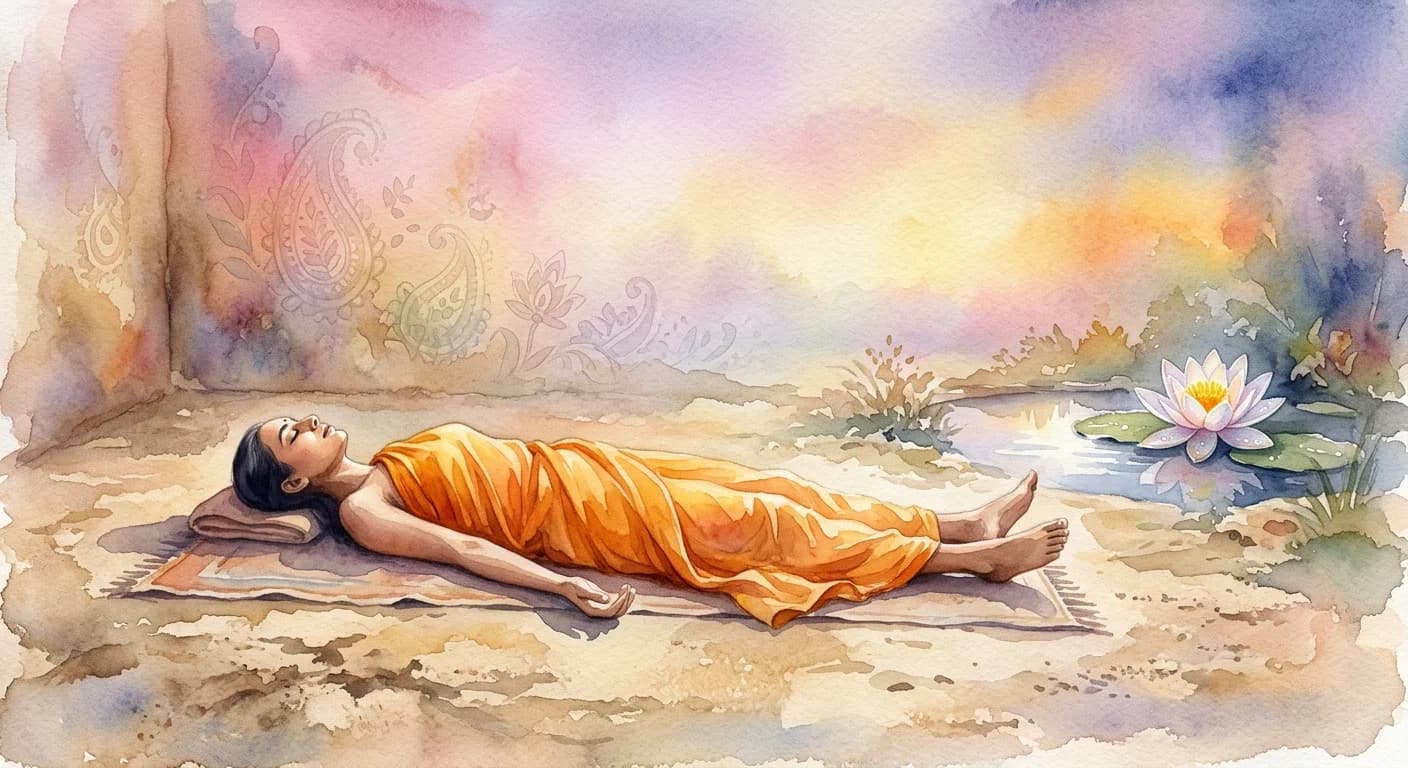
    Artistic representation of Savasana
    Sanskrit•
    🇮🇳India

    Savasana

    /SHAH-vah-sah-nah/

    Meaning

    Savasana, or Corpse Pose, is the sacred final act in a yoga practice, a profound journey into stillness. It's an intentional surrender where the body, having exerted itself, is allowed to melt into the earth, releasing every last vestige of tension. This deliberate pause is not mere rest, but a conscious integration, enabling the mind to absorb insights and the spirit to find a deep, resonant peace amidst the silence, fostering true renewal and a return to one's essential self.

    Literal Translation

    corpse pose

    The Story Behind the Word

    In Indian philosophy, the concept of 'death' or 'dissolution' is not an end but a transition, a return to the source, and Savasana embodies this. It draws from the ancient yogic understanding that true liberation (moksha) involves transcending the ego and identifying with the universal consciousness. By consciously mimicking the stillness of death, practitioners are encouraged to let go of their attachments, their striving, and their perceived identity, thereby experiencing a mini-dissolution that prepares them for deeper states of meditation and ultimately, self-realization. It reveals a culture that values introspection, surrender, and the profound wisdom found in stillness, seeing the 'end' of a practice as an essential part of its beginning.

    Experience It

    Post-Vinyasa Release

    After a vigorous Vinyasa flow, sweat glistening on her brow, Maya sank into Savasana. The initial urge to fidget slowly subsided as she consciously softened each muscle, feeling the weight of her body fully supported by the mat, finally letting go of all effort.

    Finding Inner Calm

    Mark, his mind racing with work worries, found Savasana particularly challenging. But as the teacher's soothing voice guided him to release tension from his jaw, then his shoulders, a profound quiet began to settle within him, a fleeting moment of true mental peace.

    The Deeper Meaning

    Savasana encapsulates the profound yogic principle of 'Ishvara Pranidhana' – surrender to a higher power or the natural flow of life. It teaches that true strength often lies in letting go, in ceasing all effort, and allowing the universe to take its course. This philosophy extends beyond the mat, encouraging acceptance and peace in the face of life's inevitable transitions.

    Did You Know?

    Despite its seemingly simple appearance, many yoga teachers consider Savasana to be one of the most challenging poses, requiring immense mental discipline to truly surrender and remain still.

    How It's Used

    Typically performed at the end of a yoga session to integrate the practice and promote deep relaxation.

    Emotions
    peace,serenity
    Contexts
    relaxation,solitude
    🇮🇳India

    by Dr. Kenji Tanaka·Written Mar 14, 2026·Updated Apr 3, 2026

    Related Words

    Explore more
    Dolce far nienteItalian

    Dolce far niente captures the profound joy and effortless pleasure derived from simply existing without obligation or purpose. It's the art of savoring moments of pure, unadulterated idleness – lying in the sun, watching the clouds drift, or enjoying a leisurely coffee – not as a break from work, but as a valuable state in itself. This 'sweetness of doing nothing' is a conscious embrace of stillness and contentment, allowing the soul to breathe and the senses to fully engage with the present.

    Wabi-sabiJapanese

    Wabi-sabi is the profound appreciation for the ephemeral, the imperfect, and the incomplete aspects of existence. It is about discovering beauty in the subtle textures of age, the unique character of flaws, and the gentle decay that marks the passage of time. This philosophy encourages a quiet acceptance of impermanence and a mindful connection to the natural world, finding elegance in simplicity and authenticity.

    IkigaiJapanese

    Ikigai is more than just a reason to get out of bed; it's a deeply personal and evolving sense of purpose that brings genuine fulfillment and joy to one's life. It represents the sweet spot where your passions, talents, needs of the world, and what you can be paid for beautifully converge. Discovering your ikigai often leads to a life lived with intentionality, resilience, and a profound connection to one's contributions. It's the intrinsic motivation that fuels a meaningful existence, regardless of external circumstances.

    NunchiKorean

    Nunchi is the sophisticated, almost telepathic, ability to instantly grasp the unspoken dynamics of any social situation, anticipating others' thoughts and feelings, and then responding with impeccable grace and timing. It's an acute form of social intuition, allowing one to navigate complex interpersonal landscapes by reading subtle cues like body language, tone, and context. Possessing good nunchi means effortlessly understanding the underlying emotional currents and adjusting one's behavior to maintain harmony and effectiveness, often without a single word exchanged.