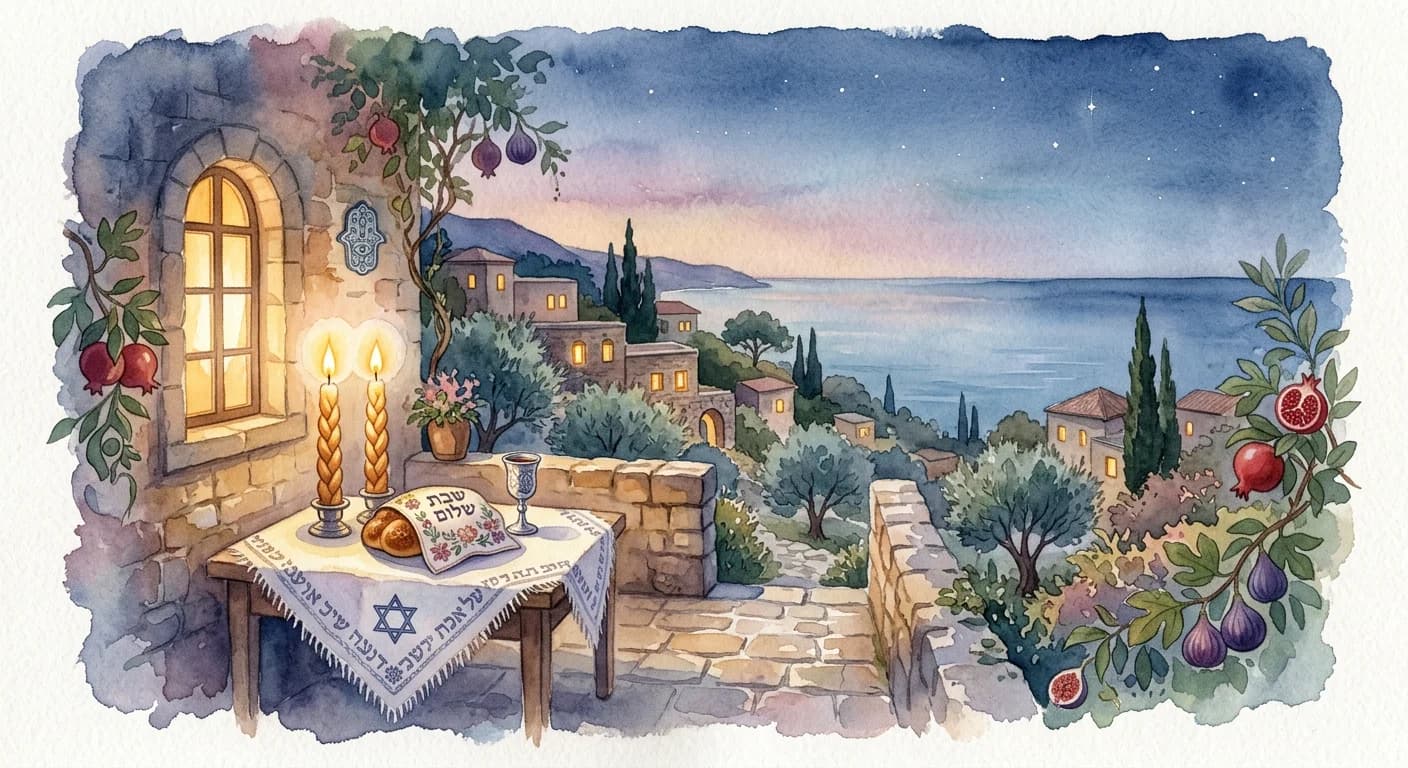
Shabat
/SHAH-bah-t/
Meaning
Shabat, or Shabbat, is not merely a day off but a sacred weekly sanctuary in Jewish life, commencing at sundown on Friday and concluding at nightfall on Saturday. It's a profound, deliberate pause from the relentless pace of the material world, dedicated to spiritual rejuvenation, communal connection, and familial intimacy. This hallowed time invites introspection and gratitude, fostering a unique sense of peace and belonging that transcends the everyday. It embodies a radical commitment to rest and spiritual sustenance, creating a rhythm of holiness in an often-chaotic existence.
Literal Translation
Sabbath
The Story Behind the Word
The concept of Shabat is foundational to Jewish identity and jurisprudence, rooted deeply in the biblical creation narrative where God rested on the seventh day. This divine act established a cosmic blueprint for humanity, elevating rest from mere cessation of activity to a holy imitation of the Creator. Philosopher Abraham Joshua Heschel famously described Shabat as a 'palace in time,' emphasizing its spatial independence and temporal sanctity. It's a weekly testament to the belief that human worth is not solely defined by productivity or material acquisition, but by the capacity for connection, contemplation, and communal celebration. Shabat reveals a worldview that prioritizes spiritual well-being and collective memory, fostering resilience and maintaining cultural continuity through millennia of dispersion and change. It's a counter-cultural declaration that true freedom lies in transcending the demands of ceaseless labor, embracing a rhythm of existence that honors both the physical and the metaphysical.
Experience It
Family Shabat Dinner
As the sun dips below the horizon on Friday, the aroma of challah and chicken fills the Goldberg home. Candles are lit, blessings are recited, and the family gathers around the table, phones put away, sharing stories and laughter, savoring the sacred time together, disconnected from the week's demands.
Quiet Shabat Morning
Saturday morning brings a profound stillness to the neighborhood. David walks to synagogue, enjoying the quiet streets, his mind free from work emails. Later, a leisurely afternoon spent reading and conversing with his wife, a tranquil respite before the new week begins.
The Deeper Meaning
Shabat embodies a profound philosophical statement: that human existence is not solely defined by endless production and consumption, but by the capacity for sacred pause and reflection. It asserts the intrinsic value of rest, community, and spiritual connection as essential components of a meaningful life. This weekly rhythm challenges the relentless pursuit of material gain, offering a radical alternative that prioritizes being over doing, and collective well-being over individual achievement, thereby cultivating a deeper appreciation for time itself as a sacred gift.
Did You Know?
The Hebrew word 'Shabbat' shares its root with 'shevet,' meaning 'to sit' or 'to cease,' highlighting its essence as a day of intentional rest and cessation from creative work.
How It's Used
The term is used to refer to the weekly day of rest in Judaism, observed from Friday sunset to Saturday night. It encompasses religious observances, family gatherings, and a general cessation of work and other mundane activities.