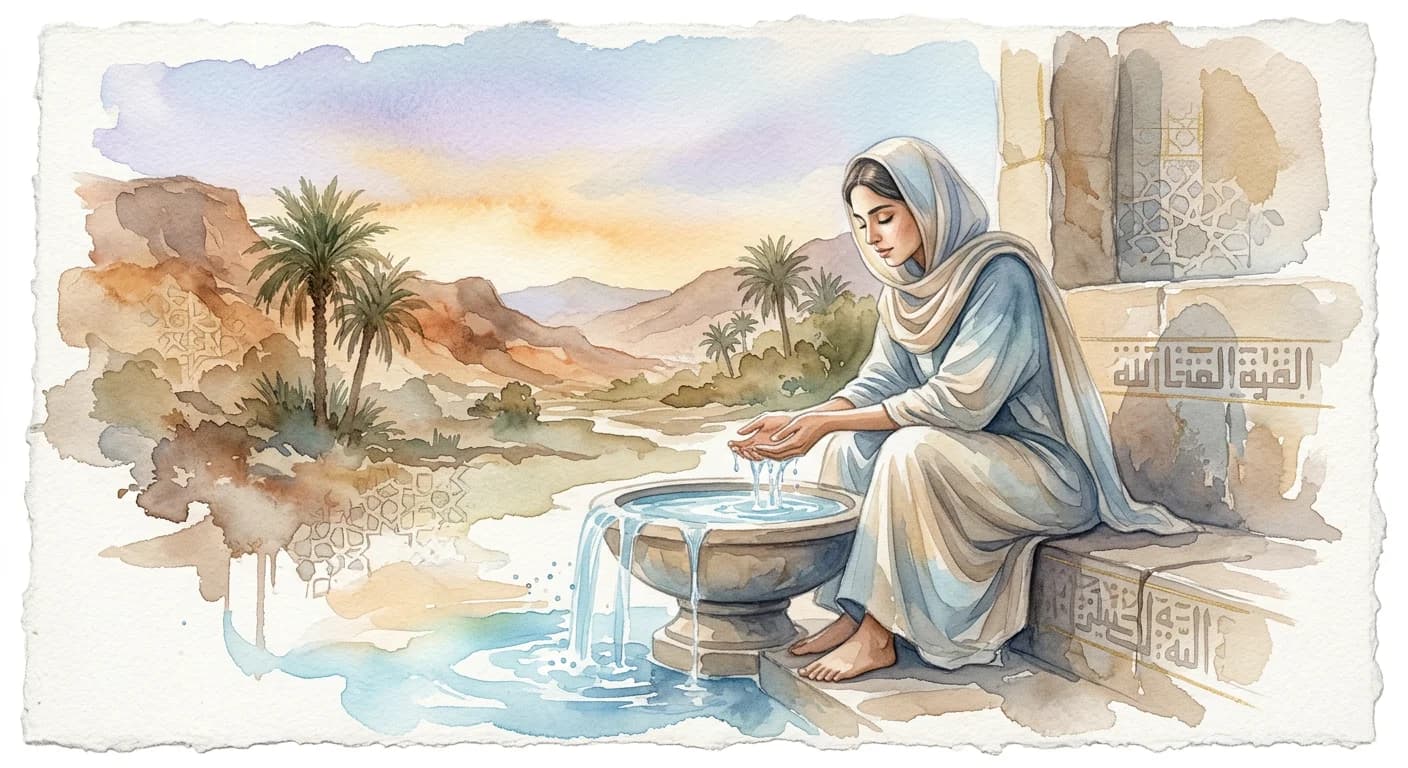
Wudhu
/WOO-doo/
Meaning
Wudhu transcends mere physical cleansing; it is a profound spiritual preparation, a deliberate act of purification that readies the Muslim for direct communion with the Divine. By meticulously washing specific parts of the body, one ritually sheds worldly distractions and impurities, aligning the mind and soul with intentional devotion. This sacred ablution instills a deep sense of inner peace and mindfulness, transforming a routine act into a powerful moment of surrender and readiness for worship.
Literal Translation
washing
The Story Behind the Word
Wudhu is deeply embedded in the daily life and spiritual fabric of Islamic cultures, reflecting a worldview where cleanliness is not just hygienic but intrinsically linked to piety and spiritual worthiness. Its existence underscores the Islamic emphasis on holistic well-being, where the physical state directly impacts the spiritual. The meticulous nature of Wudhu, passed down through generations, teaches discipline, focus, and a recognition of the sacred in the mundane. It reveals a culture that values intentionality and preparation, viewing every encounter with the divine, even daily prayers, as a moment requiring utmost respect and purity. This ritual reinforces a communal identity, as Muslims worldwide perform the same ablutions, connecting them through a shared practice of spiritual readiness.
Experience It
Before Fajr Prayer
The alarm for Fajr gently sounds. Omar rises, heads to the washroom, and begins his Wudhu, feeling the cool water awaken his senses and clear his mind, preparing him for the dawn prayer and the day ahead.
Reading the Quran
Aisha settles down with her Mushaf (copy of the Quran). Before touching the sacred text, she performs Wudhu, ensuring her hands and spirit are clean and respectfully prepared for engaging with God's words.
The Deeper Meaning
Wudhu embodies a profound philosophy of intentionality and inner purity. It posits that true worship begins not just with the mind, but with the body as a vessel, requiring purification to achieve spiritual elevation. It reflects a belief in the interconnectedness of the physical and spiritual realms, where outward cleanliness is a mirror and catalyst for inward devoutness, fostering a continuous state of readiness for the divine.
Did You Know?
The order and method of Wudhu are precisely detailed in Islamic tradition, stemming directly from the practices and teachings of Prophet Muhammad (peace be upon him), making it a living tradition for over 1400 years.
How It's Used
Performed before each of the five daily prayers (Salat) and also before reading the Quran or performing other acts of worship.