U.
HomeRegionsLanguagesEmotionsCollections
Find Your Word

“The limits of my language mean the limits of my world.”

— Ludwig Wittgenstein, Philosopher

Untranslatable

A curated collection of the world's most beautiful expressions—words that remind us language is humanity's greatest invention.

  • Home
  • Collections
  • Regions
  • Countries
  • Emotions
  • Tags
  • Contexts
  • Finder
  • Europe
  • Asia
  • Americas
  • Africa
  • Middle East
  • About
  • Contact
  • Privacy Policy
  • Terms of Service

2026 © Untranslatable. All rights reserved.

    /
    /
    1. Home
    2. /
    3. Asia
    4. /
    5. Zendo
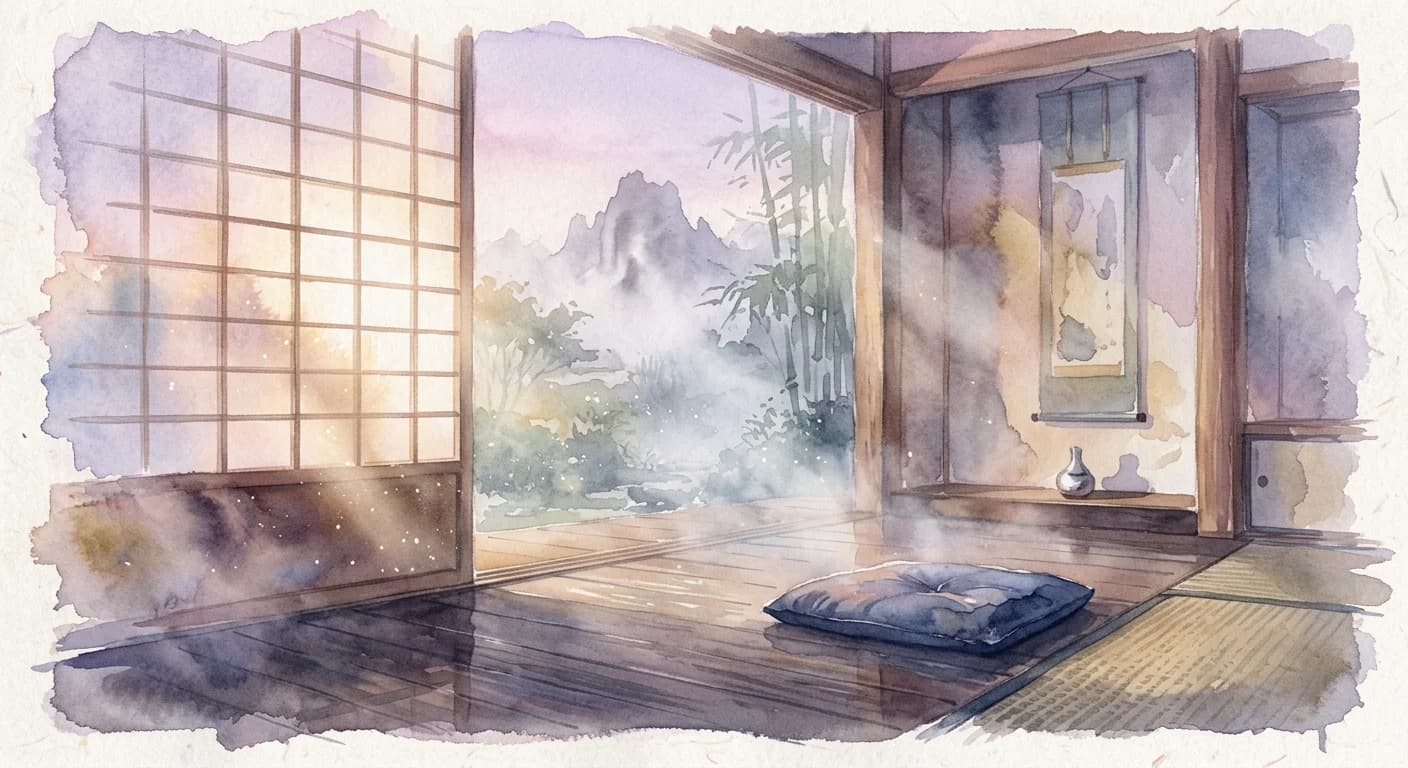
    Artistic representation of Zendo
    Japanese•
    🇯🇵Japan

    Zendo

    /ZEN-doh/

    Meaning

    A Zendo is far more than a mere building; it is a sanctified space specifically consecrated for zazen, or seated meditation, within Zen Buddhism. It embodies a profound commitment to disciplined introspection and the direct pursuit of enlightenment. Within its walls, the atmosphere is deliberately cultivated for profound quietude and focused intention, providing a sanctuary where practitioners strive to cultivate mindfulness, insight, and a deeper connection to their inner selves through ancient traditions.

    Literal Translation

    meditation hall

    The Story Behind the Word

    The Zendo's existence in Japan reflects a deep cultural value placed on disciplined self-cultivation and the pursuit of inner peace amidst life's impermanence. Originating from China, Zen Buddhism found fertile ground in Japan, where its emphasis on direct experience, rigorous practice, and the master-disciple relationship resonated strongly. The Zendo became the physical embodiment of this path, a designated space to strip away distractions and confront the self. It reveals a worldview where truth is not found in external dogma but through internal realization, fostered by sustained, silent effort. The very architecture and sparse aesthetic of a Zendo — often simple, natural materials, uncluttered spaces — mirror the Zen principle of simplicity and non-attachment, encouraging practitioners to look inward rather than outward for fulfillment.

    Experience It

    Morning Zazen Practice

    The first rays of dawn barely pierced the shoji screens as Kenji entered the Zendo. He found his cushion, adjusted his posture, and settled into the stillness, the quiet hum of the room a familiar comfort as he began his zazen, letting thoughts arise and pass without attachment.

    Seeking Guidance

    After a particularly challenging week, Akari visited the Zendo, not for formal meditation, but to speak with the Roshi. The sacred atmosphere of the hall, even when empty, offered a sense of calm and clarity, preparing her mind for a deep conversation about her spiritual journey.

    The Deeper Meaning

    The Zendo embodies the core Zen philosophy of 'practice-realization is one.' It's not just a place to learn about enlightenment, but the very crucible where enlightenment is forged through direct, embodied experience. It underscores the belief that profound wisdom is accessible to everyone, not through intellectual pursuit, but through the disciplined quieting of the mind and body in a dedicated space.

    Did You Know?

    Many traditional Zendo designs incorporate a 'tan,' a raised platform for meditation, which often also serves as a sleeping area for monks during intensive retreats, blurring the lines between daily life and spiritual practice.

    How It's Used

    Used to refer to a meditation hall or temple within Zen Buddhism, often specifying a place for seated meditation.

    Emotions
    peace,serenity
    Contexts
    relaxation,solitude,work
    🇯🇵Japan

    by Dr. Kenji Tanaka·Written Mar 14, 2026·Updated Apr 3, 2026

    Related Words

    Explore more
    Dolce far nienteItalian

    Dolce far niente captures the profound joy and effortless pleasure derived from simply existing without obligation or purpose. It's the art of savoring moments of pure, unadulterated idleness – lying in the sun, watching the clouds drift, or enjoying a leisurely coffee – not as a break from work, but as a valuable state in itself. This 'sweetness of doing nothing' is a conscious embrace of stillness and contentment, allowing the soul to breathe and the senses to fully engage with the present.

    Wabi-sabiJapanese

    Wabi-sabi is the profound appreciation for the ephemeral, the imperfect, and the incomplete aspects of existence. It is about discovering beauty in the subtle textures of age, the unique character of flaws, and the gentle decay that marks the passage of time. This philosophy encourages a quiet acceptance of impermanence and a mindful connection to the natural world, finding elegance in simplicity and authenticity.

    IkigaiJapanese

    Ikigai is more than just a reason to get out of bed; it's a deeply personal and evolving sense of purpose that brings genuine fulfillment and joy to one's life. It represents the sweet spot where your passions, talents, needs of the world, and what you can be paid for beautifully converge. Discovering your ikigai often leads to a life lived with intentionality, resilience, and a profound connection to one's contributions. It's the intrinsic motivation that fuels a meaningful existence, regardless of external circumstances.

    NunchiKorean

    Nunchi is the sophisticated, almost telepathic, ability to instantly grasp the unspoken dynamics of any social situation, anticipating others' thoughts and feelings, and then responding with impeccable grace and timing. It's an acute form of social intuition, allowing one to navigate complex interpersonal landscapes by reading subtle cues like body language, tone, and context. Possessing good nunchi means effortlessly understanding the underlying emotional currents and adjusting one's behavior to maintain harmony and effectiveness, often without a single word exchanged.