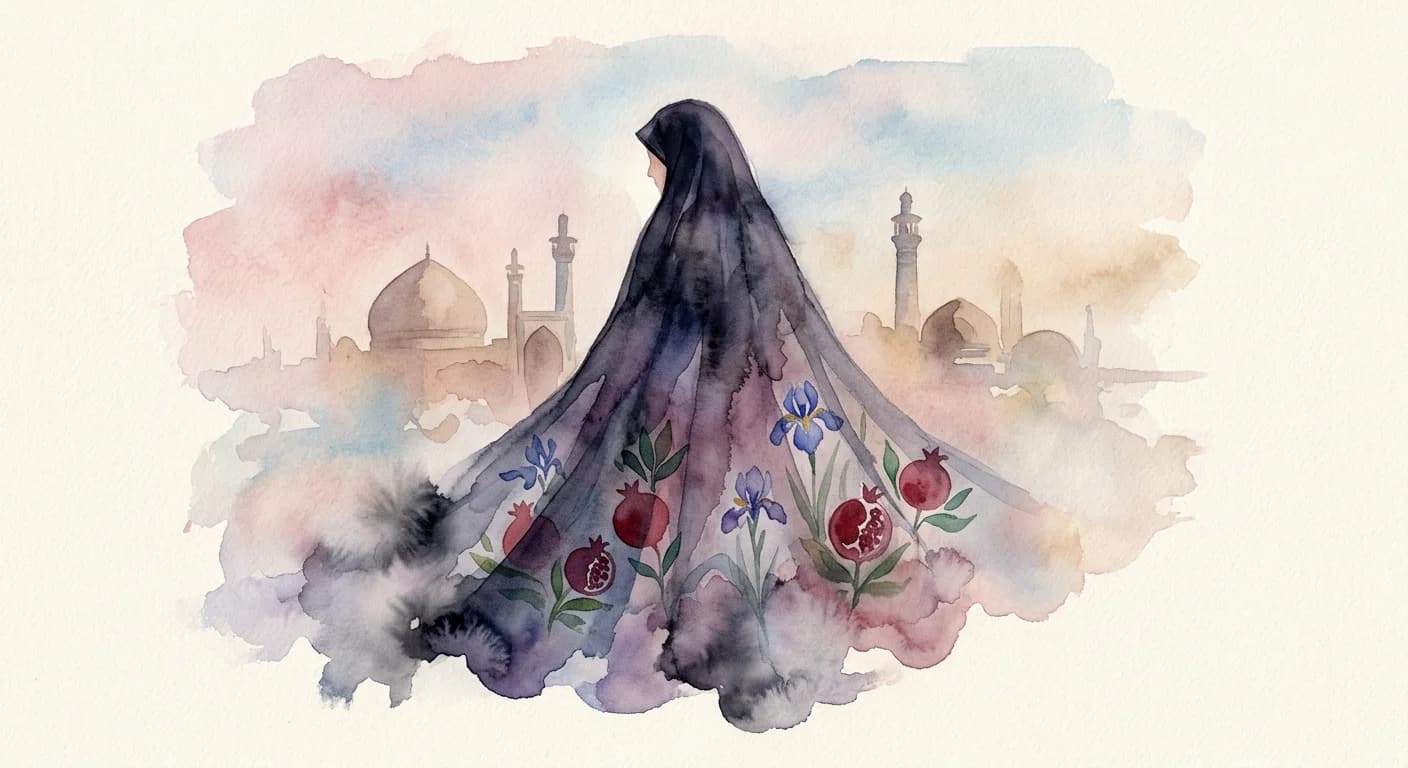
Chador
/CHAH-dor/
Meaning
The chador, a flowing, often black, semi-circular piece of fabric, is a distinctive garment primarily worn by women in Iran, enveloping the head and body while intentionally framing the face. Far more than mere clothing, it embodies a profound commitment to Islamic principles of modesty (hijab), serving as a visible declaration of piety and a deep connection to Persian cultural heritage. It allows women to move through public life with dignity, asserting an identity interwoven with centuries of tradition and spiritual devotion.
Literal Translation
tent, canopy
The Story Behind the Word
The chador's roots in Iran predate Islam, with historical evidence suggesting similar enveloping garments were worn by elite women in ancient Persia to signify status and protection. With the advent of Islam, it was recontextualized as an embodiment of religious modesty, gaining particular prominence after the 1979 Iranian Revolution as a symbol of Islamic identity and resistance to Western influence. Its adoption reflects a complex interplay of religious conviction, cultural pride, and sometimes, social expectation. For many, it represents a conscious choice to uphold a specific worldview where spiritual values guide public presentation, asserting a sense of self that prioritizes inner virtue over external adornment and challenging reductive Western perceptions of female agency.
Experience It
Morning Market Stroll
A young woman, her chador elegantly draped, navigates the bustling Tehran bazaar. With one hand she adjusts the fabric, while the other reaches for fresh herbs, her face a serene focal point amidst the vibrant chaos.
University Lecture Hall
In a university lecture, a student sits intently, her chador a soft, dark silhouette against the bright projector screen. It allows her to focus on her studies, feeling appropriately dressed within the academic environment.
The Deeper Meaning
The chador encapsulates a worldview where the sacred permeates the secular, and personal presentation is an act of devotion. It speaks to a philosophy that values inner spiritual beauty and modesty over external display, asserting a woman's right to define her public image based on religious and cultural tenets, rather than societal pressures for adornment or exposure. It represents a conscious choice for a particular form of freedom and self-expression within an Islamic framework.
Did You Know?
Historically, the chador was not always black; colors like white, blue, and patterned fabrics were common, particularly in rural areas, reflecting local traditions and practical needs.
How It's Used
The word 'chador' is used to refer to the specific type of veil worn by women in Iran and some other Middle Eastern and South Asian countries. It is a common term in everyday conversation, religious discourse, and fashion contexts related to modest clothing.