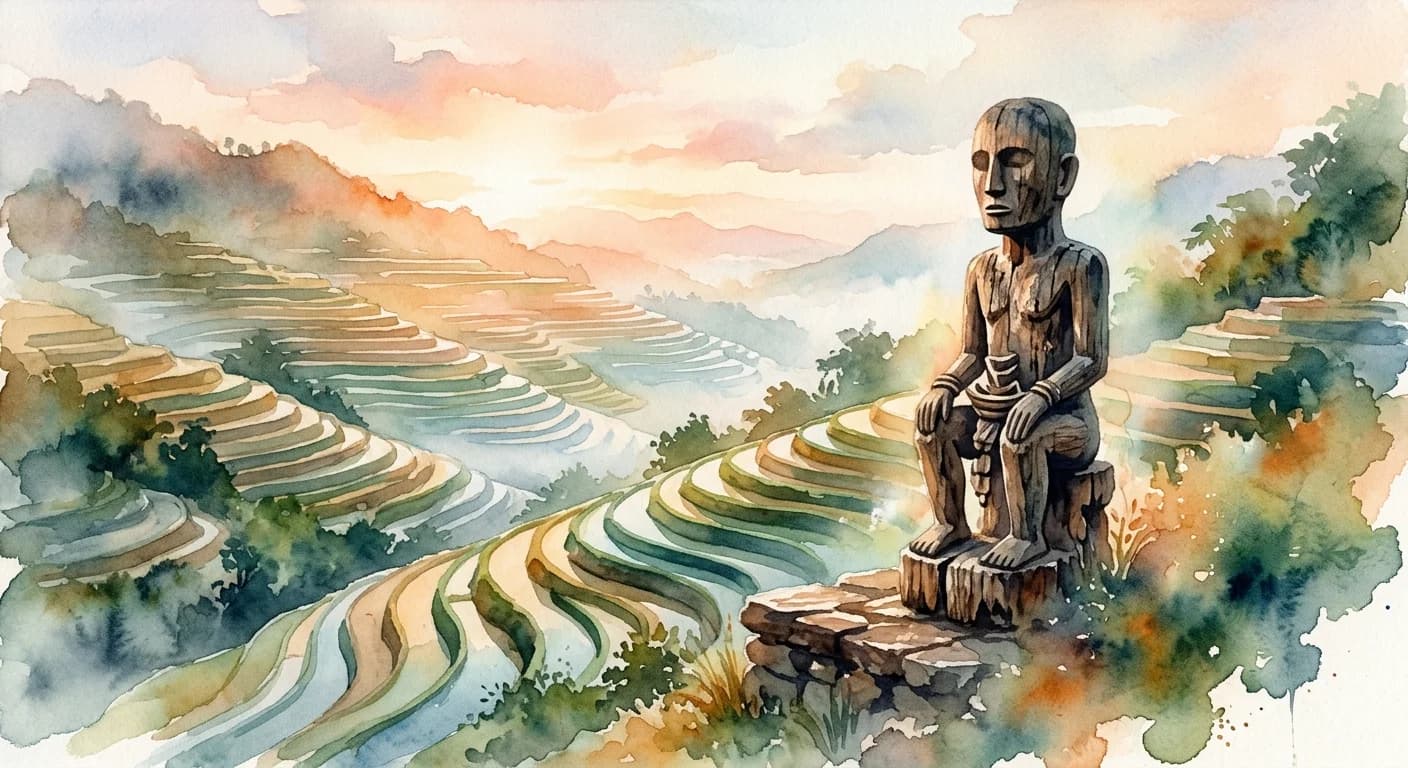
Bulul
/boo-LOOL/
Meaning
A Bulul is far more than a mere statue; it is a sacred, carved wooden effigy, predominantly of the Ifugao people in the northern Philippines, believed to be inhabited by ancestral spirits. These revered figures serve as vigilant guardians of the household, granaries, and rice crops, ensuring fertility, prosperity, and protection from harm. Embodying a profound spiritual connection to lineage and the earth, the Bulul is a tangible conduit between the living community and their revered ancestors, vital for agricultural abundance and familial well-being.
Literal Translation
Guardian image / Ancestral spirit image
The Story Behind the Word
The Bulul's existence is deeply rooted in the animistic beliefs and agrarian lifestyle of the Ifugao people, whose lives historically revolved around rice cultivation. This word and the object it represents reveal a worldview where the spiritual and material realms are inextricably linked, and ancestors continue to play an active, benevolent role in the lives of their descendants. The Bulul acts as a physical manifestation of this enduring connection, embodying the belief that the spirits of the departed are not truly gone but remain powerful protectors and providers. Their presence in homes and granaries underscores a philosophy of communal interdependence, where human efforts are blessed and safeguarded by ancestral wisdom and power, ensuring the continuity of life, family, and harvest. The creation and ritual activation of a Bulul, often involving blood sacrifices and elaborate ceremonies, highlight its profound spiritual significance and its role in maintaining cosmic balance and societal harmony.
Experience It
Blessing the Harvest
As the rice paddies shimmered green, an elder carefully placed a newly carved Bulul beside the family's granary. Through incantations and offerings, the spirit was invoked, binding the Bulul to its duty to ensure a bountiful harvest and protect the family's sustenance from pests and misfortune.
A Child's Protector
A young mother, cradling her newborn, gently touched the smooth, aged wood of the Bulul standing vigil in her home. She whispered a prayer, trusting the ancestral spirit within to watch over her child, bringing health and strength, just as it had for generations before her.
The Deeper Meaning
The Bulul embodies a profound philosophy of continuity and reciprocal relationship between the living and the dead. It reveals a worldview where ancestors are not merely remembered, but actively participate in the present, guarding prosperity and ensuring the well-being of their lineage. This underscores a collective identity where individual and communal fate are interwoven with ancestral blessings and spiritual protection, fostering deep reverence for heritage and the cycles of life and death.
Did You Know?
Some Bulul figures are ritually 'fed' with chicken or pig's blood during ceremonies, believed to strengthen the spirit dwelling within and enhance its protective powers, a practice called 'ngilin'.
How It's Used
Bulul are traditionally placed in the home, often in a granary or a designated sacred space, to watch over the family and their resources.