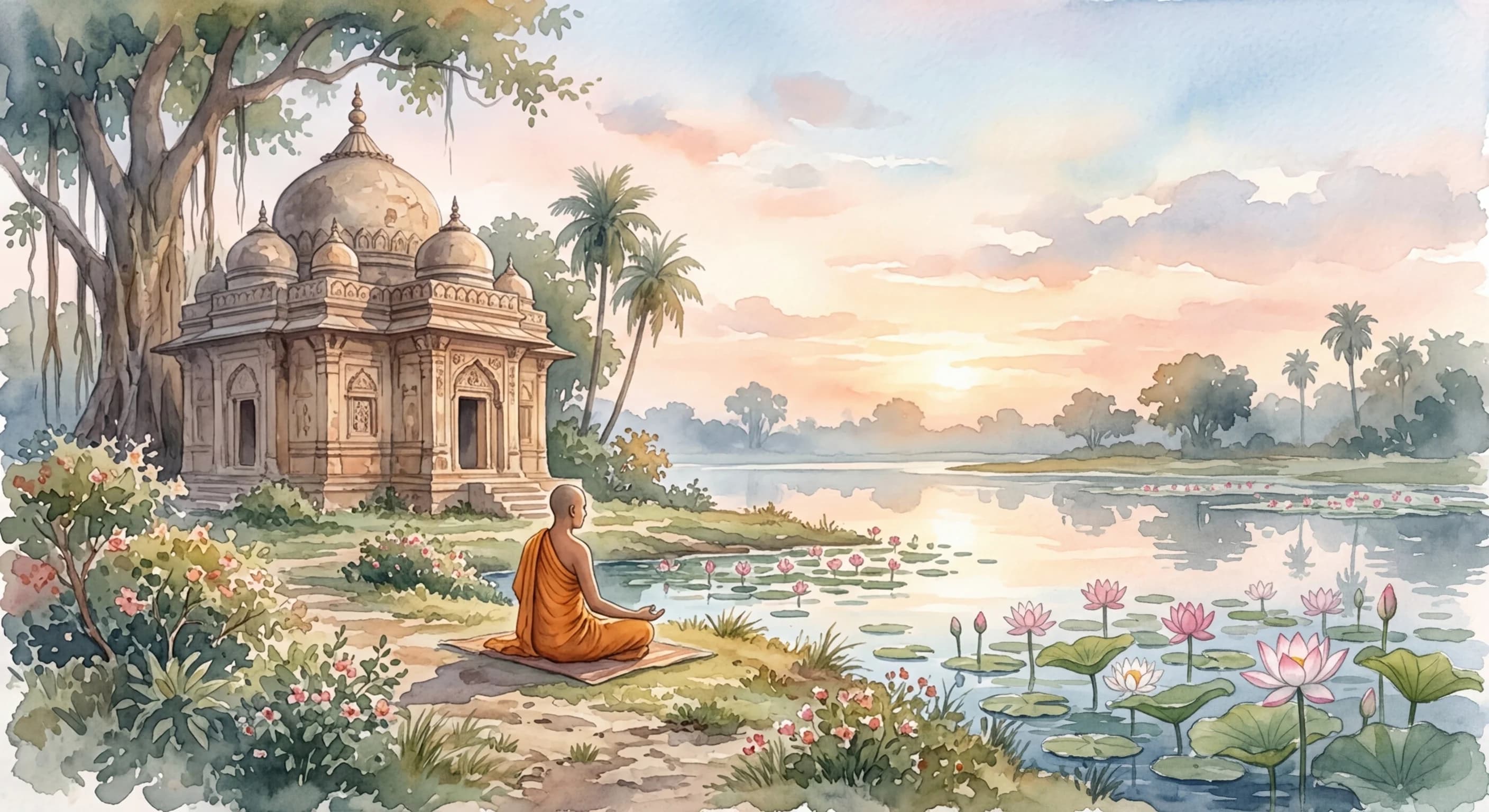
Vairagya
/vai-RAAG-yah/
Meaning
Vairagya transcends mere apathy; it is a cultivated, profound dispassion that emerges from deep wisdom, leading to an unshakable inner freedom. It signifies a conscious, active letting go of desires, attachments, and the allure of worldly pleasures, understanding their impermanent and ultimately unsatisfying nature. This state is not a denial of life but a reorientation, finding contentment and peace within the self rather than seeking it in fleeting external validations or experiences. It's a journey towards equanimity, liberating the spirit from the cycle of suffering.
Literal Translation
dispassion, non-attachment, indifference
The Story Behind the Word
Vairagya is a cornerstone of Indian spiritual traditions, particularly Vedanta, Yoga, and Buddhism, reflecting a worldview that prioritizes spiritual liberation (moksha) over material accumulation. Its existence reveals a profound cultural understanding that suffering often stems from attachment and desire, and true happiness lies in inner freedom. Ancient sages observed the fleeting nature of existence and proposed Vairagya as a practical path to transcend sorrow. This concept isn't about asceticism for its own sake, but a strategic detachment to achieve a higher, more stable state of being. It underpins practices like meditation and renunciation, shaping the lives of renunciates (sanyasis) and informing the ethical framework for householders, encouraging mindful engagement with the world without becoming enslaved by it. It signifies a culture deeply invested in self-realization and the pursuit of ultimate truth.
Experience It
Renouncing the Throne
Prince Siddhartha, witnessing suffering, renounced his royal life, family, and future kingdom. His departure wasn't out of hatred for his former life, but a deep Vairagya, a profound dispassion for the temporary pleasures and illusions of power, seeking a lasting solution to suffering.
Artist's Unattachment
A painter, after completing a masterpiece, feels no overwhelming attachment to its ownership or critical acclaim. She appreciates the creation but holds a Vairagya towards its outcome, knowing her true fulfillment lies in the act of creation itself, not external validation.
The Deeper Meaning
Vairagya embodies a core philosophical tenet that the external world is inherently impermanent and cannot provide lasting happiness. It posits that true and eternal joy (Ananda) resides within the self, accessible only by disengaging from the incessant pursuit of external gratification. This worldview encourages introspection, self-mastery, and a radical redefinition of success, shifting it from material gain to spiritual liberation and inner peace.
Did You Know?
The word 'Vairagya' literally combines 'vi' (without) and 'raga' (color, passion, attachment), implying a state of being 'without color' or 'uncolored' by worldly desires, seeing things as they truly are.
How It's Used
Vairagya is a key concept in Indian philosophies, especially Vedanta and Yoga. It is often discussed in spiritual texts and teachings as a path to liberation (moksha) and self-realization. It is cultivated through practices like meditation, self-inquiry, and scripture study, leading to a state of inner peace and detachment from life's dualities.