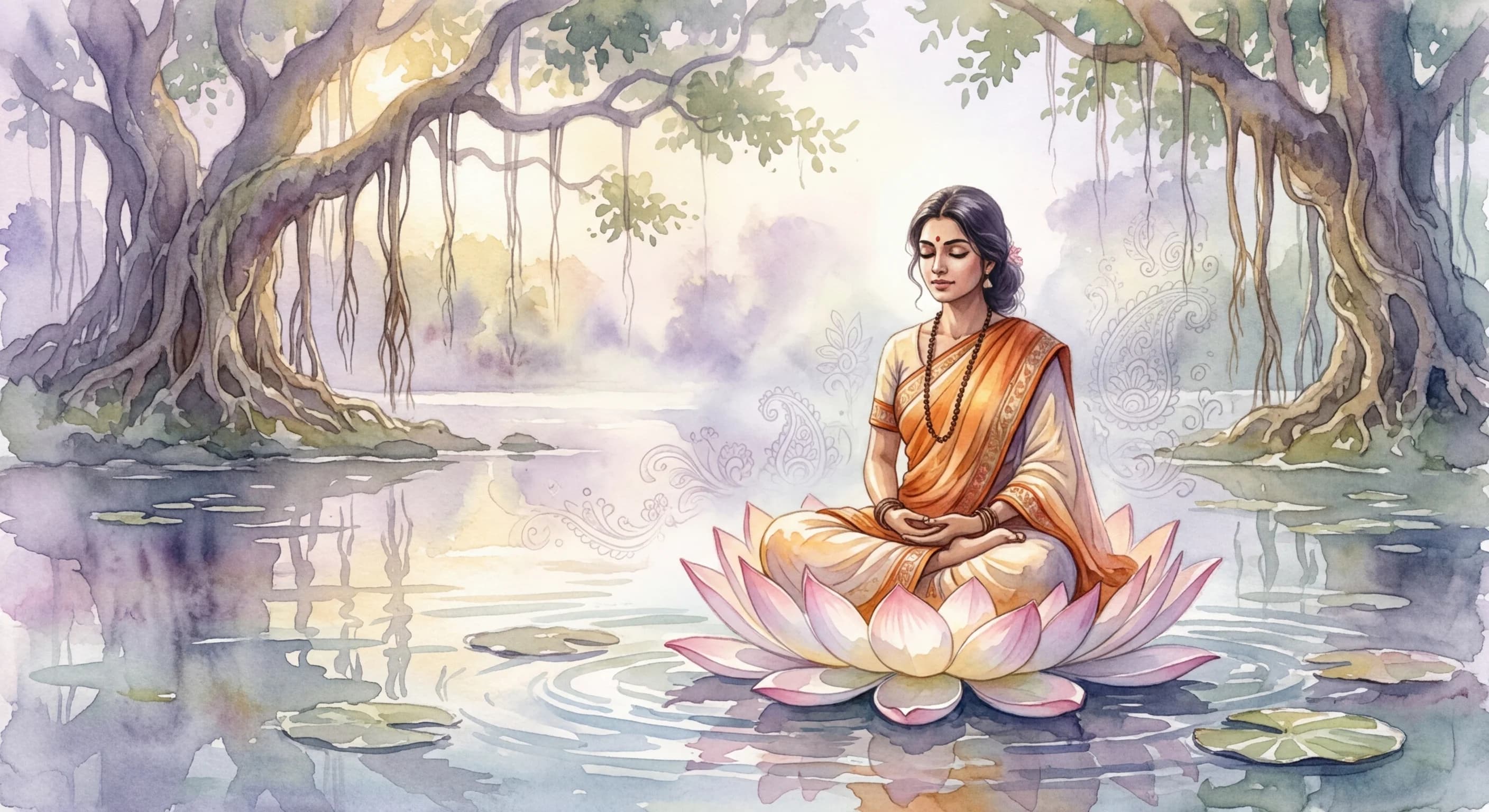
Samadhana
/suh-MAA-dhuh-nuh/
Meaning
Samadhana signifies a profound, unshakeable inner composure, a spiritual equilibrium achieved not by suppressing emotions, but by transcending their sway through focused contemplation. It's a state where the mind, having settled its turbulent waves, rests in a deep, unwavering stillness, allowing for crystal-clear perception and a profound sense of inner harmony. This cultivated mental stability enables one to navigate life's inevitable challenges with grace, resilience, and an undisturbed core of peace, becoming a wellspring of wisdom and tranquility.
Literal Translation
settlement, composure, equanimity, calmness
The Story Behind the Word
Samadhana is a cornerstone concept across various Indian philosophical and spiritual traditions, particularly in Yoga, Vedanta, and Buddhism. Its existence highlights a deep-seated cultural emphasis on inner experience and mental discipline as pathways to ultimate truth and liberation (moksha). The pursuit of Samadhana reflects a worldview where external circumstances are seen as transient, and true well-being stems from cultivating an internal sanctuary of peace and clarity. This word reveals a society that values introspective journey over material accumulation, recognizing the mind as the primary tool for both suffering and liberation. It underscores the belief that mastery over one's mental landscape is the ultimate form of empowerment and spiritual progress, a core tenet for millennia.
Experience It
Meditator's Deep Peace
During a long meditation retreat, a practitioner sits amidst the sounds of a bustling ashram, yet her mind remains utterly still. She has achieved a state of Samadhana, where external disturbances simply pass through her awareness without creating a ripple in her profound inner peace.
Leader's Calm Resolve
Facing a major crisis, the village elder listens calmly to all perspectives, his gaze steady and his voice unwavering. His decisions are clear and compassionate, demonstrating Samadhana – a mind settled and composed even under immense pressure, allowing for wise action.
The Deeper Meaning
The concept of Samadhana reveals a profound understanding of the human mind's potential for self-mastery and liberation. It posits that true freedom is not found in controlling external events, but in cultivating an internal environment impervious to their chaotic influence. This worldview emphasizes the inherent divinity within each individual, accessible through disciplined introspection and a settled mind, making peace an internal achievement rather than an external condition.
Did You Know?
In Patanjali's Yoga Sutras, Samadhana is one of the five 'Yamas' (ethical restraints) that form the foundation of Yogic practice, emphasizing its role in moral and mental purity.
How It's Used
Used in philosophical and spiritual contexts, often within discussions of yoga, meditation, and Vedanta to describe a state of mental stability and peace.