Maitri
/MY-tree/
Meaning
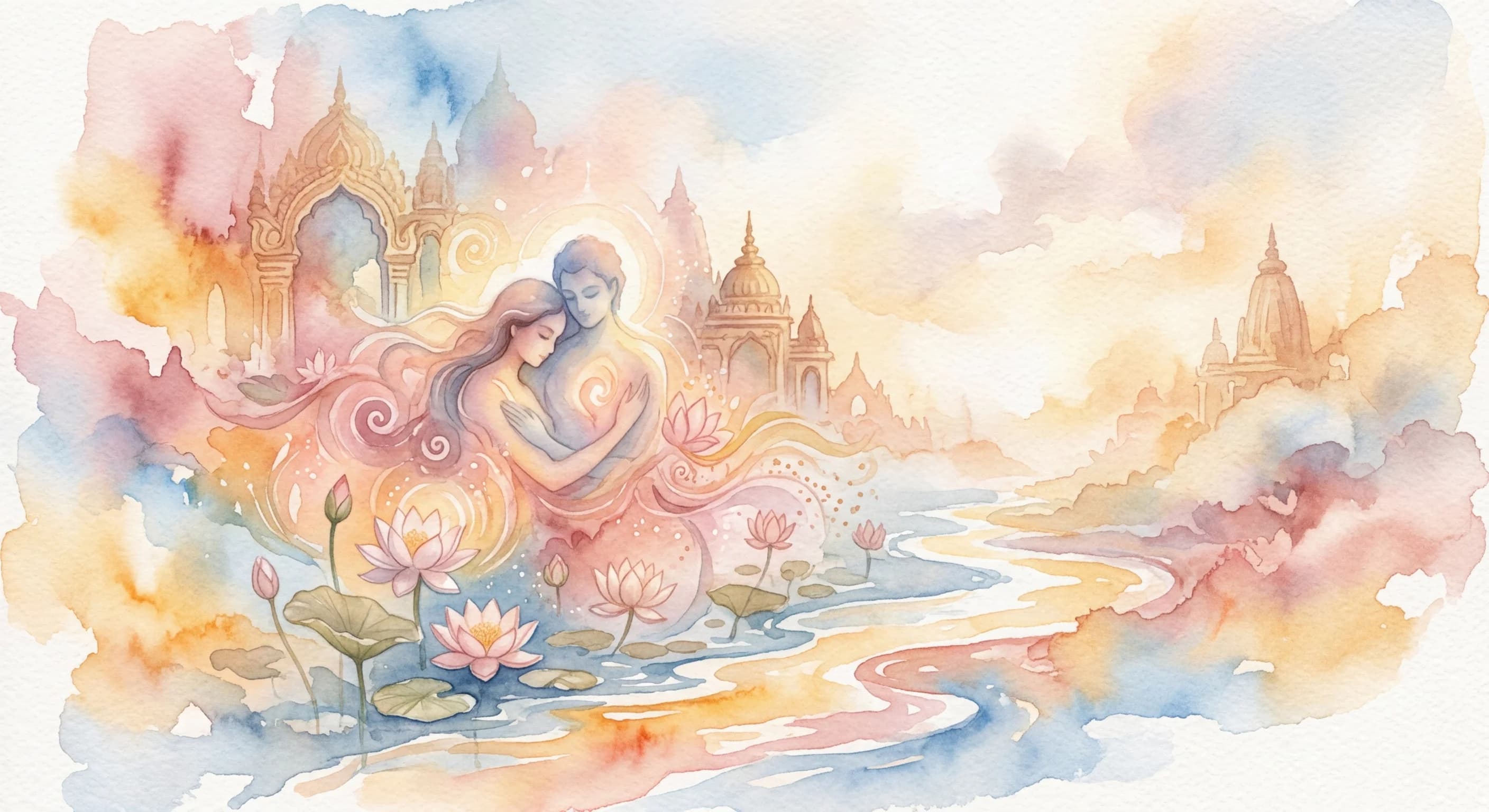
Maitri is a radiant, boundless loving-kindness that transcends mere friendship, extending unconditionally to all beings, including oneself. It's a benevolent, gentle affection stemming from profound understanding and acceptance, fostering an unwavering sense of inner peace and goodwill. This universal warmth actively seeks the welfare of everyone, dissolving suffering and cultivating harmonious existence, forming a cornerstone of spiritual practice in various traditions.
Literal Translation
friendship, friendliness, benevolence, kindness, love
The Story Behind the Word
Maitri is deeply embedded in the philosophical and spiritual fabric of ancient India, particularly flourishing within Hindu and Buddhist traditions. Its existence highlights a cultural emphasis on inner transformation, ethical conduct, and the interconnectedness of all life. The concept arose as a vital antidote to suffering, promoting a worldview where individual peace is intrinsically linked to the well-being of the collective. It reflects a society that valued spiritual cultivation over material gain, advocating for a compassionate response to the human condition and the cultivation of a harmonious social order through personal practice. Maitri isn't just a virtue; it's a foundational principle for achieving liberation (moksha) and enlightenment (nirvana), revealing a profound understanding of consciousness and empathy.
Experience It
Meditative Cultivation
During her daily meditation, Maya focuses on her breath, then gently extends a feeling of warmth and well-being first to herself, then to her family, her community, and finally to all beings across the globe, silently wishing them peace and freedom from suffering. This is the practice of Maitri bhavana.
Responding to Conflict
When a neighbor angrily confronts him, instead of reacting defensively, Rohan takes a deep breath and consciously invokes a feeling of Maitri. He listens patiently, seeking to understand the neighbor's pain and wishing for their inner peace, even amidst the tension.
What Gets Lost in Translation
English speakers often conflate Maitri with simple 'friendship' or 'kindness,' missing its profound, unconditional, and universally applicable nature. It's not about liking someone, but about cultivating an active wish for their well-being, free from attachment or expectation. It's a state of being, not just an action.
Across Cultures
While direct equivalents are rare, concepts like 'metta' in Pali Buddhism (often translated as loving-kindness) are almost identical. In Christianity, 'agape' love shares a similar spirit of unconditional, selfless love. Confucian 'Ren' (benevolence, humaneness) also emphasizes a deep, empathetic concern for others, reflecting a universal aspiration for interconnected well-being.
The Deeper Meaning
Maitri reveals a profound philosophical insight that true happiness and liberation are not found in isolation, but in a radical interconnectedness with all existence. It posits that cultivating unconditional goodwill towards others, and oneself, is not merely a moral virtue but a direct path to dissolving the ego, reducing attachment, and experiencing a deeper, more expansive state of consciousness. It's a recognition that suffering is universal, and compassion is its most potent antidote.
Did You Know?
The ancient Buddhist text 'Metta Sutta' (Pali for Maitri Sutta) is entirely dedicated to the practice of cultivating loving-kindness, outlining its profound benefits for both the practitioner and the world.
How It's Used
Maitri is often invoked in meditation practices, spiritual teachings, and philosophical discussions, particularly within Buddhist and Hindu traditions, to cultivate compassion and reduce suffering.