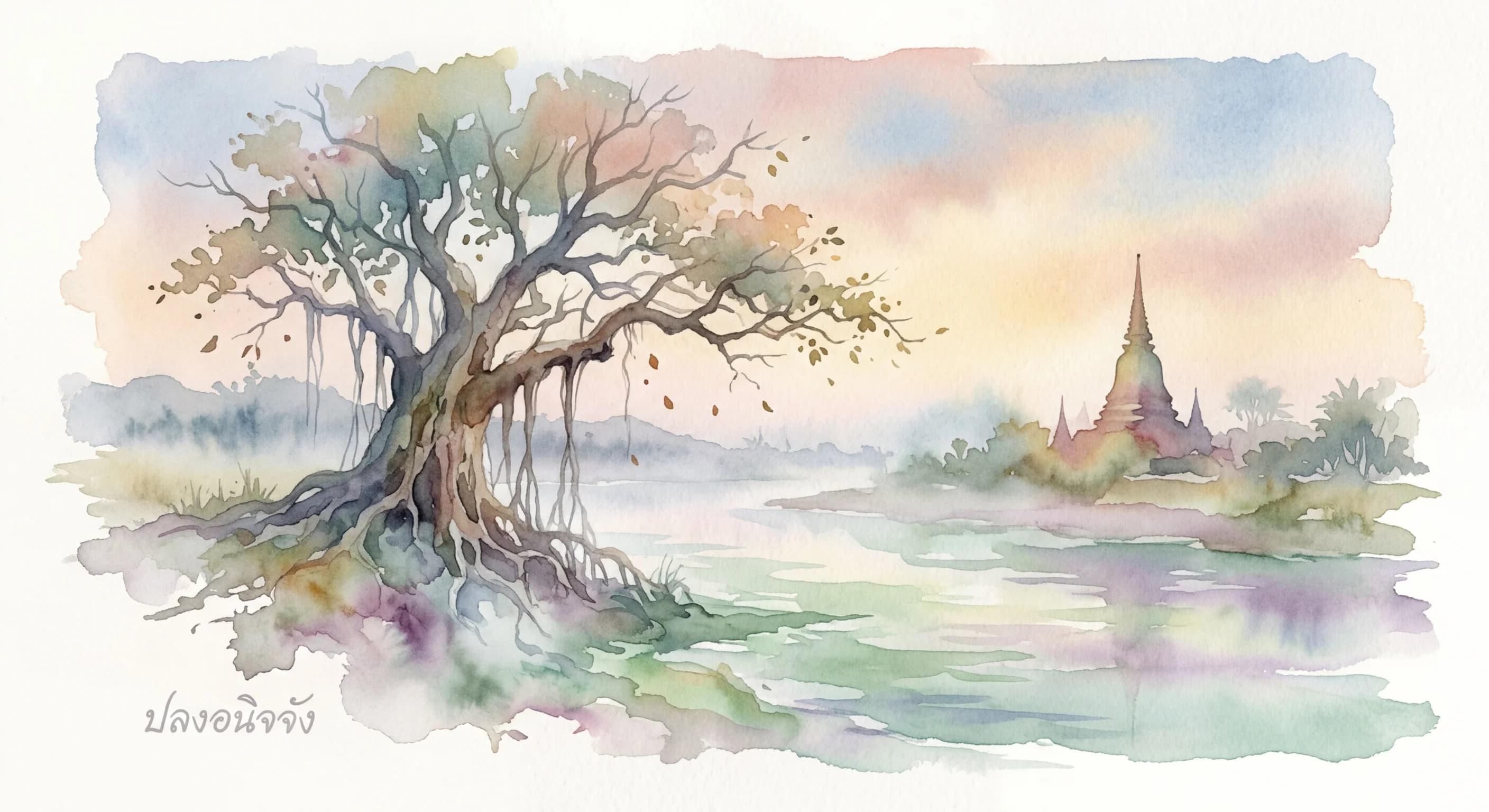
ปลงอนิจจัง (plong a nit jang)
/plohng ah-nit-jahng/
Meaning
This Thai phrase encapsulates a profound acceptance of impermanence and the transient nature of all things, deeply rooted in Buddhist philosophy. It's not mere resignation, but a calm, reasoned acknowledgment that life, like everything else, is subject to change, decay, and eventual dissolution. Embracing 'plong anitchang' means finding peace by letting go of attachment to fleeting experiences, possessions, or even one's own identity, understanding that suffering arises from resisting this fundamental truth of existence. It is the conscious cultivation of a mind that doesn't cling, thereby liberating oneself from the cycle of desire and disappointment.
Literal Translation
Let go of impermanence
The Story Behind the Word
The concept of 'plong anitchang' is foundational to Theravada Buddhism, which is the dominant religion in Thailand and deeply interwoven with its cultural fabric. For centuries, Buddhist teachings have permeated daily life, from temple rituals to personal ethics, emphasizing the three characteristics of existence: impermanence (anicca), suffering (dukkha), and non-self (anatta). 'Plong anitchang' serves as a practical application of 'anicca', providing a mental framework for navigating life's inevitable ups and downs. It reflects a worldview where happiness is not found in accumulation or permanence, but in the wisdom of letting go and adapting to change. This perspective shapes Thai attitudes towards loss, success, and even the future, fostering resilience and a certain equanimity in the face of life's unpredictable currents. The phrase is often invoked in times of difficulty or transition, acting as a cultural balm.
Experience It
Coping with Loss
After the passing of her beloved grandmother, Preeya felt a profound sadness. Her aunt gently reminded her, 'Preeya, we must plong anitchang. Her time has come, and though we grieve, we accept the impermanence of all life.' This helped Preeya begin to process her grief with a sense of peace rather than bitter resistance.
Career Setback
Somchai had worked tirelessly on a project only for it to be cancelled unexpectedly. Initially frustrated, he later reflected, 'This is just another example of plong anitchang. My hard work wasn't wasted, but clinging to the outcome would only bring me more suffering.' He then calmly began planning his next steps.
The Deeper Meaning
This word reveals a philosophy centered on liberation through understanding. It posits that suffering is not inherent in external events but arises from our internal resistance to change. By consciously embracing impermanence, one can transcend the cycle of attachment and aversion, leading to a state of inner peace and equanimity. It suggests that true freedom comes not from controlling the world, but from mastering one's own mind and its reactions to the flow of existence.
Did You Know?
While deeply spiritual, 'plong anitchang' is also used in everyday, secular contexts in Thailand, like when a favorite restaurant closes or a plan falls through, highlighting its pervasive cultural integration.
How It's Used
Used when reflecting on the impermanence of life, loss, or inevitable change, often to encourage acceptance and reduce suffering.