U.
HomeRegionsLanguagesEmotionsCollections
Find Your Word

“The limits of my language mean the limits of my world.”

— Ludwig Wittgenstein, Philosopher

Untranslatable

A curated collection of the world's most beautiful expressions—words that remind us language is humanity's greatest invention.

  • Home
  • Collections
  • Regions
  • Countries
  • Emotions
  • Tags
  • Contexts
  • Finder
  • Europe
  • Asia
  • Americas
  • Africa
  • Middle East
  • About
  • Contact
  • Privacy Policy
  • Terms of Service

2026 © Untranslatable. All rights reserved.

    /
    /
    1. Home
    2. /
    3. Asia
    4. /
    5. Hỷ xả
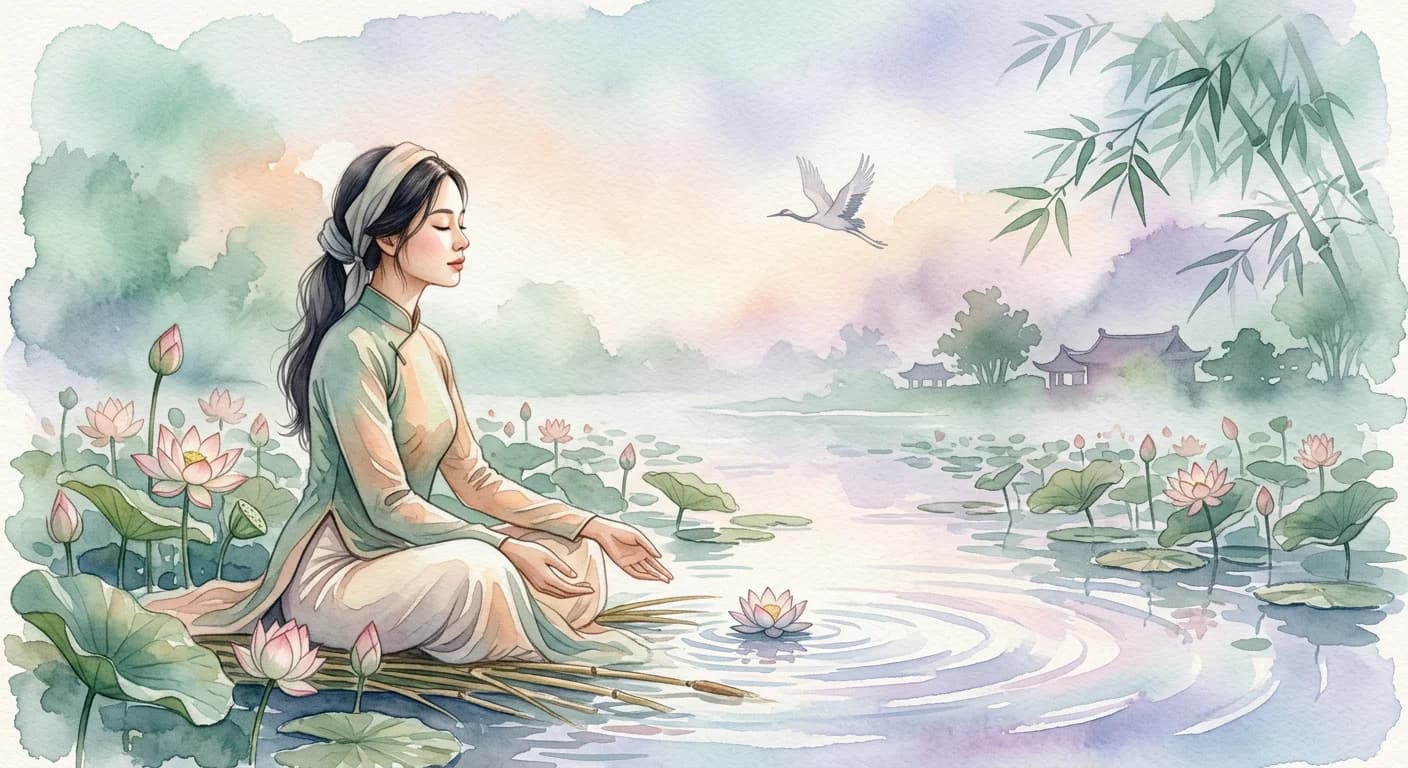
    Artistic representation of Hỷ xả
    Vietnamese•
    🇻🇳Vietnam

    Hỷ xả

    /Hee SAH/

    Meaning

    Hỷ xả transcends simple forgiveness; it is a profound spiritual act of deliberately releasing the desire for retribution, letting go of attachment to grievances, and transforming negative emotions into inner peace. It's a conscious, joyful liberation from the chains of anger, resentment, or the need for 'justice' in a punitive sense. This practice cultivates a serene heart and fosters harmonious relationships, embodying a deep commitment to spiritual well-being over holding onto past hurts.

    Literal Translation

    Joy/Happiness (Hỷ) + To release/Let go (xả)

    The Story Behind the Word

    Hỷ xả is deeply ingrained in Vietnamese culture, primarily through the pervasive influence of Mahayana Buddhism, which arrived in Vietnam over a millennium ago. It reflects the Buddhist principle of 'xả' (equanimity or letting go) combined with 'hỷ' (joy or sympathetic joy). This concept is not just a moral directive but a path to spiritual enlightenment and mental liberation, emphasizing that clinging to negativity harms oneself more than the perceived wrongdoer. Vietnamese society, having endured centuries of conflict and hardship, often values resilience, reconciliation, and the ability to move forward, making 'hỷ xả' a vital cultural mechanism for healing and communal harmony. It underscores a worldview where inner peace and collective well-being often take precedence over individual vindication.

    Experience It

    Family Reconciliation

    After years of silent resentment over an inheritance dispute, Aunt Mai decided to practice hỷ xả. She invited her estranged brother for Tết, not to demand an apology, but to genuinely let go of the bitterness, opening the door for their families to reconnect in peace.

    Workplace Harmony

    When a colleague unfairly took credit for his project, Minh initially seethed with anger. However, recalling the teachings of hỷ xả, he chose to release his grievance, focusing instead on his own work and maintaining a positive, collaborative environment, finding inner calm rather than seeking confrontation.

    The Deeper Meaning

    Hỷ xả reveals a philosophical framework where true freedom comes from internal detachment rather than external control or retribution. It posits that suffering arises from clinging, and liberation is achieved by consciously releasing attachments, especially to negative emotions and the desire for revenge. This worldview prioritizes inner transformation and spiritual growth as the ultimate path to peace and happiness, both for the individual and the community.

    Did You Know?

    The 'hỷ' in Hỷ xả is also found in 'tứ vô lượng tâm' (four immeasurable minds) in Buddhism: từ (loving-kindness), bi (compassion), hỷ (sympathetic joy), and xả (equanimity), highlighting its foundational spiritual importance.

    How It's Used

    Used to describe the act of forgiving someone, letting go of past hurts, or releasing a grudge, especially in Buddhist contexts or when encouraging reconciliation.

    Emotions
    gratitude,peace,serenity
    Contexts
    family,farewell,relaxation
    🇻🇳Vietnam

    by Dr. Kenji Tanaka·Written Mar 10, 2026·Updated Apr 3, 2026

    Related Words

    Explore more
    Dolce far nienteItalian

    Dolce far niente captures the profound joy and effortless pleasure derived from simply existing without obligation or purpose. It's the art of savoring moments of pure, unadulterated idleness – lying in the sun, watching the clouds drift, or enjoying a leisurely coffee – not as a break from work, but as a valuable state in itself. This 'sweetness of doing nothing' is a conscious embrace of stillness and contentment, allowing the soul to breathe and the senses to fully engage with the present.

    Wabi-sabiJapanese

    Wabi-sabi is the profound appreciation for the ephemeral, the imperfect, and the incomplete aspects of existence. It is about discovering beauty in the subtle textures of age, the unique character of flaws, and the gentle decay that marks the passage of time. This philosophy encourages a quiet acceptance of impermanence and a mindful connection to the natural world, finding elegance in simplicity and authenticity.

    IkigaiJapanese

    Ikigai is more than just a reason to get out of bed; it's a deeply personal and evolving sense of purpose that brings genuine fulfillment and joy to one's life. It represents the sweet spot where your passions, talents, needs of the world, and what you can be paid for beautifully converge. Discovering your ikigai often leads to a life lived with intentionality, resilience, and a profound connection to one's contributions. It's the intrinsic motivation that fuels a meaningful existence, regardless of external circumstances.

    NunchiKorean

    Nunchi is the sophisticated, almost telepathic, ability to instantly grasp the unspoken dynamics of any social situation, anticipating others' thoughts and feelings, and then responding with impeccable grace and timing. It's an acute form of social intuition, allowing one to navigate complex interpersonal landscapes by reading subtle cues like body language, tone, and context. Possessing good nunchi means effortlessly understanding the underlying emotional currents and adjusting one's behavior to maintain harmony and effectiveness, often without a single word exchanged.