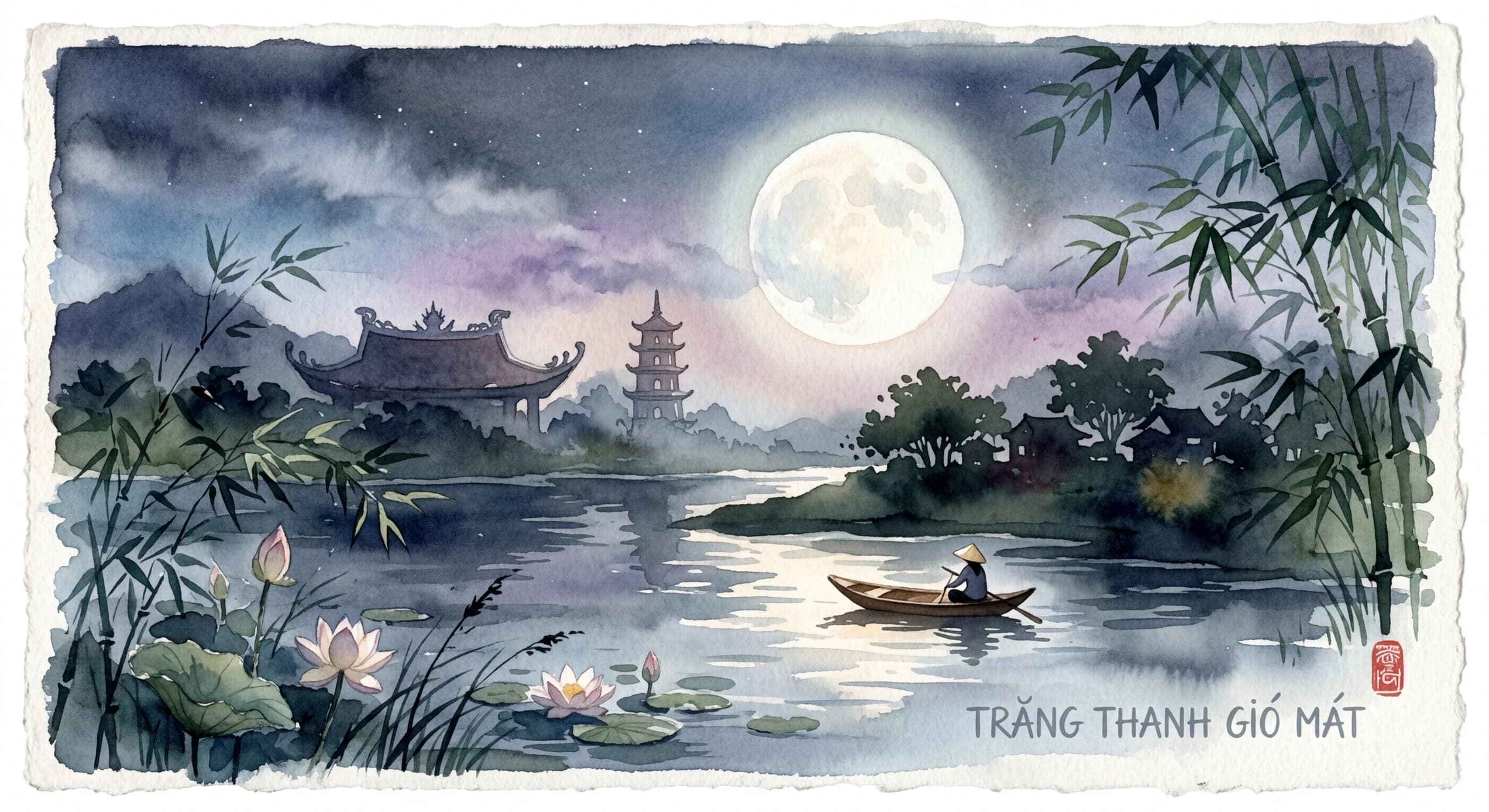
Trăng thanh gió mát
/TRUNG TUNK YOH MAHT/
Meaning
This Vietnamese phrase paints a vivid picture of a perfectly serene and refreshing night, where the moon shines brilliantly in a clear sky and a gentle, cool breeze whispers through the air. It encapsulates a moment of exquisite natural harmony, offering profound tranquility and a deep sense of peace. More than just a weather description, it's an invitation to savor simple joys and find contentment in the subtle, beautiful rhythms of the natural world, a hallmark of Vietnamese aesthetic appreciation.
Literal Translation
Moon clear wind cool
The Story Behind the Word
The phrase 'Trăng thanh gió mát' is deeply embedded in Vietnamese culture, reflecting a profound connection to nature and a philosophical appreciation for simplicity and balance. For centuries, Vietnamese poetry, folk songs, and proverbs have celebrated such idyllic natural scenes, often linking them to feelings of love, nostalgia, and spiritual reflection. This idiom embodies the Vietnamese concept of 'thanh tịnh' (purity and serenity) and 'hòa mình vào thiên nhiên' (harmonizing with nature), which are central to both daily life and artistic expression. It highlights a cultural value placed on finding beauty and solace in accessible, everyday natural phenomena, rather than seeking grand, dramatic displays. The phrase evokes a collective memory of peaceful evenings spent outdoors, perhaps in a village courtyard or by a river, fostering a sense of community and shared appreciation for life's gentle pleasures.
Experience It
Evening on the Balcony
After a long, hot day in the city, Mai stepped onto her small balcony. The full moon was high, casting a soft glow, and a light, cool breeze offered sweet relief. She sighed contentedly, thinking, 'This is truly a moment of trăng thanh gió mát.'
Village Festival Night
The children had finally fallen asleep after the lively village festival. Old Ba sat on his porch, watching the clear sky and feeling the refreshing air. He smiled, remembering how many perfect 'trăng thanh gió mát' nights he had enjoyed in this very spot over the decades.
The Deeper Meaning
The phrase encapsulates a core Vietnamese philosophical tenet: appreciating the subtle beauty and harmony in the natural world as a path to inner peace and contentment. It suggests that true joy isn't found in material wealth or complex achievements, but in the simple, accessible gifts of nature. This worldview fosters a sense of gratitude and encourages a slower, more mindful approach to life, where moments of serene natural beauty are cherished as profoundly enriching experiences.
Did You Know?
This phrase is so iconic that it's often used metaphorically in Vietnamese literature and poetry to describe a state of mind – calm, clear, and unburdened – even when the weather isn't literally 'moon clear, wind cool'.
How It's Used
Used to describe a beautiful, peaceful evening, often experienced outdoors, especially during summer nights. It's a common idiom to express appreciation for pleasant natural conditions and the feelings of calm and relaxation they bring.