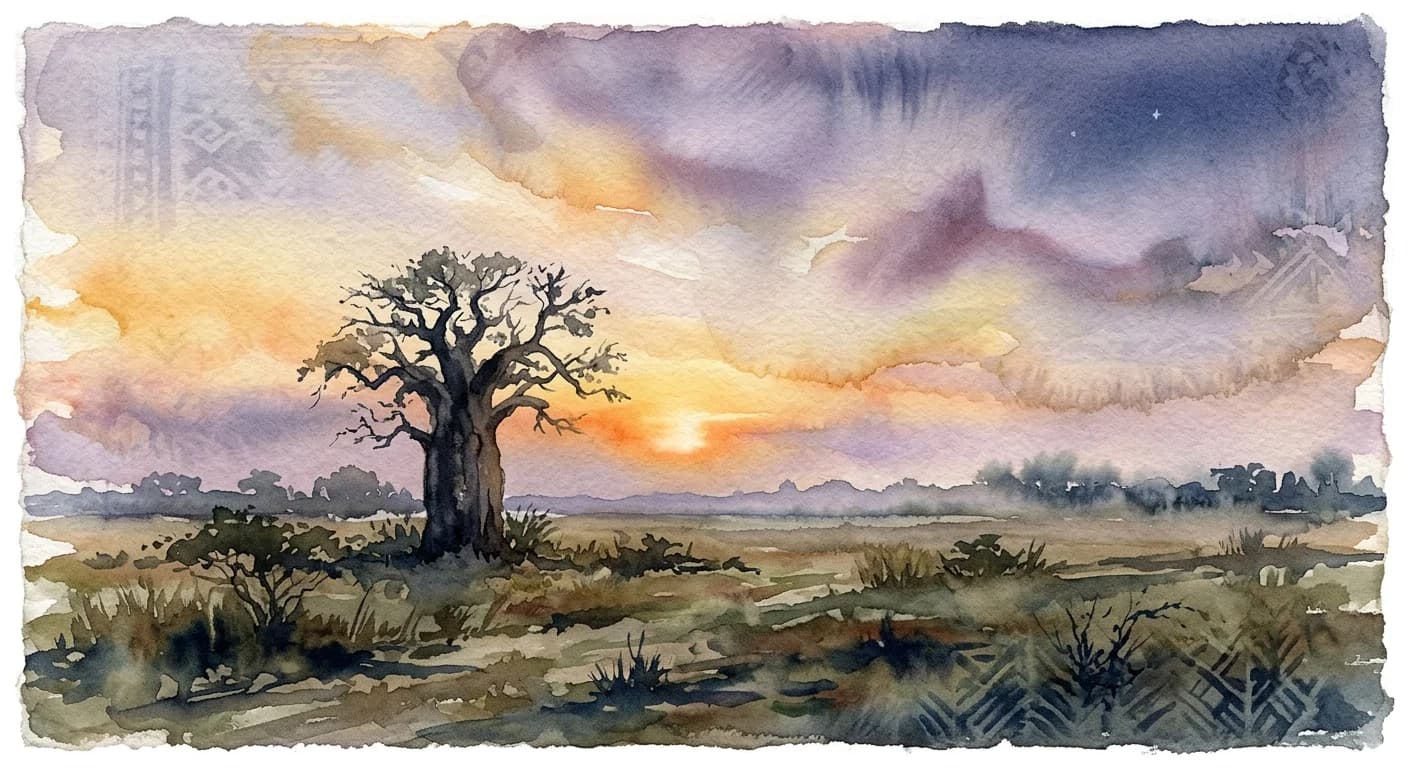
Janjanbi
/JAHN-jahn-bee/
Meaning
Janjanbi captures that ethereal interlude between the sun's descent and the complete embrace of night. It's a fleeting canvas where the sky softens from fiery hues to deep indigos, still holding the day's warmth while whispering of the stars to come. This liminal space is more than just a time; it's a mood, inviting introspection and a gentle pause as the world transitions from activity to rest, imbued with a unique sense of quiet anticipation and ephemeral beauty.
Literal Translation
Twilight / Dusk
The Story Behind the Word
In Wolof culture, janjanbi is not merely a descriptive term for twilight but a moment imbued with spiritual and social significance. It is a time often associated with the call to prayer (Maghrib), marking a sacred transition in the day. Elders might share stories or impart wisdom during this period, as the softening light encourages reflection and communal gathering after a day of work. The fading light symbolizes the day's end and the approach of night, which in many African traditions can be a time of mystery and spiritual activity. It underscores a profound connection to natural rhythms and a cultural appreciation for moments of transition and contemplation.
Experience It
Evening Storytelling
As the sun dipped below the horizon, painting the sky in shades of orange and purple, Grandma called the children to her mat. 'It's janjanbi,' she announced softly, 'the perfect time for a story before the stars fully awaken.' The children settled in, their faces illuminated by the fading light, ready to listen.
Quiet Reflection
After a long day in the fields, Musa sat on his porch, watching the last slivers of daylight disappear. The cool breeze of janjanbi brought a sense of peace. He took a deep breath, reflecting on the day's work and the blessings he had received, before heading inside for the evening meal.
The Deeper Meaning
The concept of janjanbi reveals a worldview that values liminality and the sacredness of transitions. It suggests that moments 'in-between' day and night are not merely voids, but rich spaces for contemplation, connection, and spiritual awareness. It encourages a mindful slowing down and an appreciation for the subtle shifts in the natural world, linking these to human experience and communal life.
Did You Know?
In Wolof tradition, janjanbi is sometimes considered a particularly auspicious time for certain spiritual practices or for making important decisions, due to its transitional and reflective nature.
How It's Used
Used to describe the specific time of twilight, the period between sunset and complete darkness.